
Leaders feel it. Teams feel it. Organizations feel it. Pressure is everywhere — pace, expectations, shifting priorities, competing demands, the unrelenting, often unspoken race to stay ahead of what’s coming next. But pressure itself isn’t the real issue; it’s the context. The real problem is how we show up inside it.
I’ve seen this clearly in organizations across industries — and even more clearly at my own dinner table. Raising a fighter pilot and a computational neuroscientist alongside my husband has given me a front-row seat to human performance under intense conditions. One conversation is about split-second decisions at 500 feet (500 wasn’t a typo); the next is about neural networks and optimization problems.
Different languages, same truth: when pressure rises, patterns show up. And those patterns — how our energy moves within us, between us, and around us — shape everything.
The Three Dimensions of Potential
Through my work with thousands of individuals and hundreds of teams, I’ve found that this energy is always in motion across three dimensions of potential:
- Within — inner energy: clarity, attention, regulation (or dysregulation).
- Between — relational energy: communication, trust, alignment (or misalignment).
- Around — environmental energy: pace, structure, expectations, culture (functional or dysfunctional).
They are distinct, but not separate. They are deeply interconnected. When you influence one of them, you influence all of them.
Activating Potential
That brings us to potential itself. Potential is not a destination. It’s not a place you “get to.” It’s our capacity to develop or become, and it’s already within us. The work is learning how to connect to it — in real time, under real pressure, with real stakes.
Is it okay that this work is simple? Not a trick question. How many of us want things to be simple yet constantly make them more complicated than they need to be? (Or know someone who does?)
That’s why Intend–Notice–Move™ sits at the centre of my work. It is not reflective busywork. It is not self-help. It is a simple yet powerful activational practice for leaders, teams, and entire organizations. Because activation is not just the outcome — it is the process. As I often say: insight without activation is just an interesting idea.
Getting Started
Humans are pattern-makers because patterns conserve energy. So, this piece includes three micro activations — the smallest unit that forms a pattern.
Before we begin, think of a problem — a real one. Something present enough to matter, small enough to hold. We’ll work with it together in the next two minutes.
1. INTEND — Energy Follows Intention
Intention is an energy-directing mechanism. It shapes where we place attention and what becomes possible. And we can send it in two directions:
- Inward: How do I want to show up?
- Outward: What is the impact I want to have?
Both can be expressed in a single word — intend.
Your first micro activation: intend.
Return to your problem. Choose one word for how you want to show up. Choose one word for the impact you want to have. Energy follows intention.
2. NOTICE — Noticing Is a Superpower
In a distracted, disjointed world, noticing has become a competitive advantage. When we don’t notice, we react automatically. When we do notice, we’re at choice to create.
Take a moment to notice this: react and create contain the same letters. But they produce entirely different results.
Your second micro activation: notice.
Return to your problem. What do you notice is happening now?
- Within you?
- Between you and others?
- Around you in the environment or system?
Capture it in a word or short phrase. Noticing is a superpower.
3. MOVE — Small Shifts Change Patterns
Insight becomes impact only through action. And action doesn’t need to be dramatic to matter. In fact, it’s much better (and more sustainable) when it’s not. A 5% shift can change the whole trajectory of a moment, a meeting, or a decision. Such as:
- A clarifying sentence.
- A curious question.
- A simplification.
- A reset.
- A decision that has been waiting too long.
- A breath waiting to be taken.
Your third micro activation: move.
In your problem, what is one small move that would shift you closer to your intention — even slightly? Not the whole solution. Just the next step. Perhaps just one exhale. Small shifts change patterns.
What You Just Did
Intend draws us forward (inwardly and outwardly). Notice grounds us in now (the only place movement is possible). Move takes us to the next step (the only one we can actually take).
Each part is powerful on its own. Together, they wire a pattern that shifts human energy from reaction to creation and from problem to potential.
Working in Pressure, Not Against It
Pressure isn’t going anywhere. But leaders, teams, and cultures don’t need pressure to ease to operate differently. When we see that energy moves within, between, and around us — and when we activate it through practices like Intend–Notice–Move™ — we stop reacting from old patterns and start creating from new possibilities.
Decisions become more ease-full. Teams get clearer. Cultures steady. And potential — already present — connects in real time.
This is human energy at work. Not more effort. Not more urgency. More connection to what’s already there.
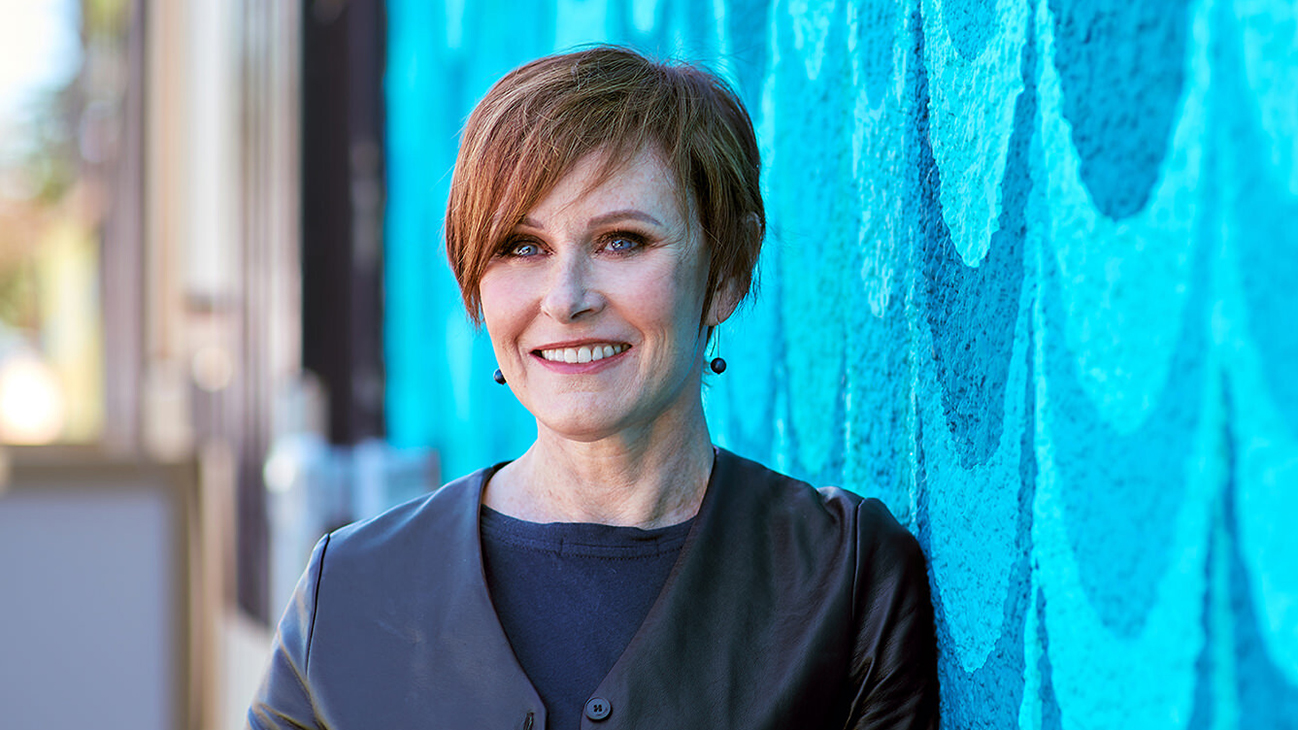
Pam August is a dynamic potential activator on a mission to help organizations navigate the uncertainties and challenges of today’s world with greater energy, ease, and effectiveness. She has an extensive background in leading culture development within diverse organizations and is a fierce champion of people and culture as essential drivers of strategic success.
Today, as a sought-after speaker, Pam helps high-performance organizations across the world unlock organizational potential in three key dimensions: individual growth, team dynamics, and cultural development.
Contact us to learn more about Pam and how she can help your audience unlock their full potential on an individual, team, and organizational level.