
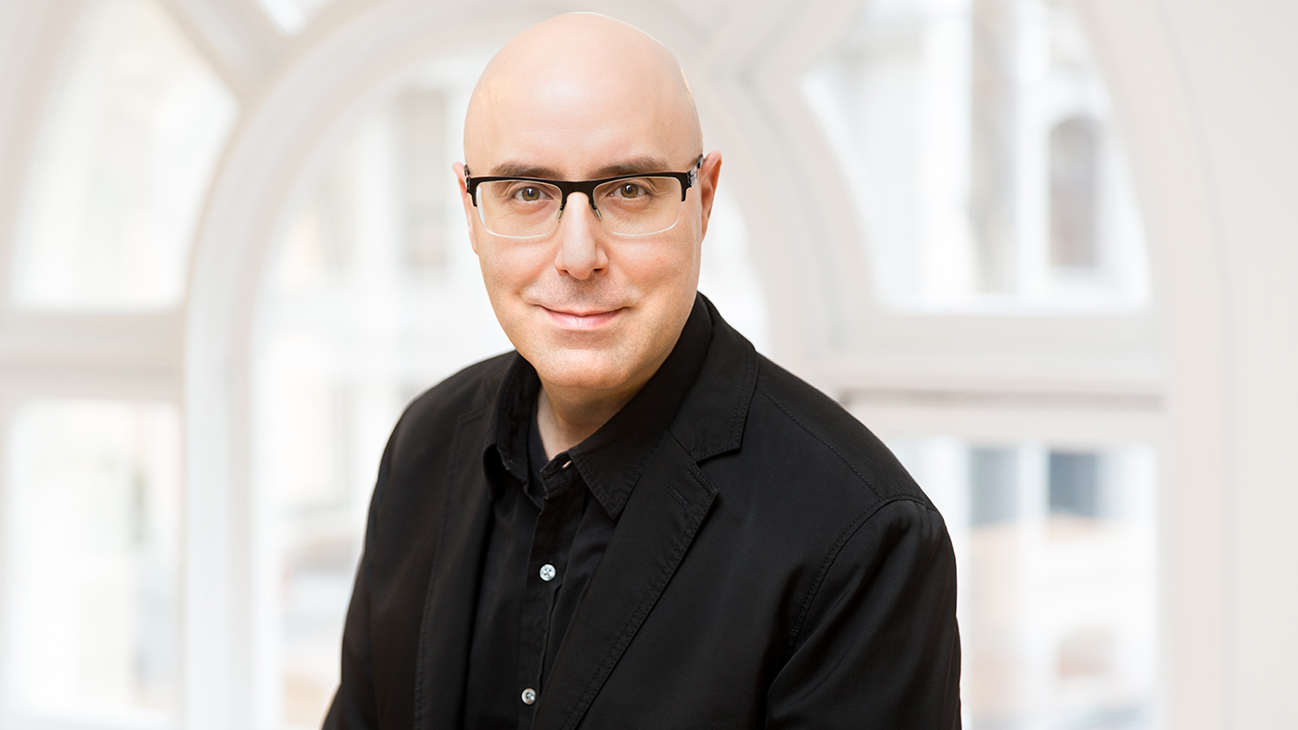
Just the other week, I was giving a keynote, and before hitting the stage, the organizer told me that they had found me through ChatGPT. It took me aback, but it was true.
They put in the inputs they were looking for in terms of a speaker for their event, and my name was the first one that popped up. It was relevant, timely, and the right answer to their question.
Maybe search engine optimization isn’t dead. Maybe it just got too artificial and now artificial intelligence will save it?
How AI is Changing Everything
Small Business Week is upon us and if you run a business, you’ve probably felt it: the quiet panic that comes every time Google changes the search engine rules and algorithm. But this time, it’s not a new ranking factor or algorithm update, it’s AI itself. And that very well could change everything.
Google’s new AI Overviews (those little summaries that sit at the top of search) are, in fact, changing everything. If you have not tinkered with Perplexity or even ChatGPT as a search engine, it would be an important first and second step to better understand just how much AI is changing the search landscape.
These new ways to search, scrape, summarize, and serve answers work so effectively that users never need to click links or scour pages for an answer — the result is the answer.
For small businesses, that’s terrifying… and opportunistic.
Welcome to the AEO Era
For years, your marketing strategy probably revolved around one simple idea: show up in search (either organic or paid). Now? Search doesn’t necessarily lead to you.
Welcome to the era of AEO or Answer Engine Optimization where the goal isn’t to rank, it’s to be referenced. Where being visible doesn’t mean being visited. And where your content’s value is filtered through the language model, not the user’s wonky ways of searching for something.
That’s the shift that most small businesses aren’t ready for (but must be). Because this isn’t just a technical change, it’s a philosophical one. We’ve spent two decades optimizing for machines, and now the machines are optimizing for us.
From Attention to an Intimacy Economy
For years, the marketing playbook was simple: Make content, add keywords, earn backlinks, rank higher, and pay for ranking on top of that (as much as possible).
SEO and SEM was about attention: visibility, reach, and clicks. But the world is changing. We’ve moved from the attention economy to the intimacy economy.
In the attention economy, success meant scale. Everyone saw the same search results and everyone clicked the same links (mostly). The metrics were big, loud, and public.
But in the intimacy economy, it’s the opposite. Two people can search for the same thing and get completely different answers. Different tones, different products, different stories.
Search has become subjective. Google’s AI Overviews are not a single window to the web, and that means your content has to be more human than ever before.
Think about how we already behave online. Our TikTok feeds are fingerprints (from the social graph to the interest graph). Our Spotify playlists feel psychic. Our inboxes are algorithmic mood boards. And now, even search — the last “neutral” space of the internet — is being hyper-personalized by AI.
This is not the end of marketing though, it’s just a different kind.
Feeding AI: The New Rules of Content
In the intimacy economy, connection isn’t about millions of impressions. It’s about how deeply one message can land and whether the algorithm recognizes it as something worth sharing forward.
So, what does that mean for small businesses? It means the homepage isn’t the front door anymore — the answer is.
Your content has to feed the AI, not just the crawler. That means writing and structuring information in ways that AI can interpret as truthful, helpful, and authoritative. It’s less about tricking the system and more about teaching it.
AEO and SEO: Working in Tandem
Here’s where AEO and SEO actually intersect.
SEO still matters. It matters for context. AI Overviews don’t invent answers, they synthesize them. So, the more structured, trustworthy, and semantically rich your content is, the more likely it becomes the invisible source that powers an AI’s response.
In other words, optimization isn’t about ranking higher, it’s about being quietly indispensable. That’s the new game and it’s also the oldest one. Because whether it’s Google, TikTok, or ChatGPT, all these systems are chasing the same thing: relevance.
Relevance is the AI algorithmic version of intimacy. It’s not about shouting louder, it’s about being so aligned with the user’s need that you don’t have to shout at all.
The Human Advantage in an AI World
So, how do small businesses adapt?
Start with what makes you… you. AI may scrape the internet, but it still can’t fake humanity.
Your stories, your local knowledge, your tone — that’s the data that doesn’t exist anywhere else. Create content that isn’t trying to go viral but trying to vibe. Write like you’re answering one person, not pleasing the algorithm. Because the irony is: that’s what the algorithm actually wants.
Make your site conversational, not transactional. Focus on answers, not just keywords. Use tools like schema markup and structured data (yes, the nerdy stuff is important) but use them to teach, not game. That’s how you might win at SEO, SEM, and AEO.
The New World of Marketing
This new era of marketing isn’t about fighting AI. It’s about collaborating with it.
Generative AI has only amplified what was already happening — a shift from broadcasting to whispering. From “look at me” to “this is for you.”
That’s the intimacy economy in action (and at scale). And it’s what every small business now has to learn.
The brands that win won’t be the loudest. They’ll be the ones that feel closest to many people, while at the same time making each customer feel like the content was created just for them.
I’d like to think that, if used well, this new way to think about how (and why) a business ranks is less “artificial” and way more “intelligence” — and a lot more human.
When brands like Google, Walmart, LEGO, Shopify, Microsoft, Procter and Gamble, Cisco, and Unilever want to know what’s next for them (and their customers), they call Mitch Joel. Named one of Forbes’ “Speakers Worth Catching”, he fills in the gaps to help leaders build their business today to meet the demands of tomorrow.
Creating customized presentations to ensure the maximum impact, Mitch’s big, engaging, entertaining, and educating style leaves audiences informed and ready to tackle the future today.
Contact us to learn more about Mitch and discover how he can help your organization turn disruption into opportunity, leverage AI strategically, and build marketing momentum that lasts.