Last year, I asked a question that has since become one of my most-booked keynote topics: what comes after what’s next? Today, we can see the path towards that future taking form through world models and physical AI. AI is moving beyond screens, evolving from generating representations of the world to understanding, simulating, and acting within it.
I call what lies beyond this next leap the AfterNext — the point where frontier technologies converge, transforming work and everyday life. It’s where robots learn alongside people, intelligent glasses guide us through the world, and responsive environments adapt to what we say, see, and do. It also gives leaders a way to step inside possible futures before deciding which ones to build.
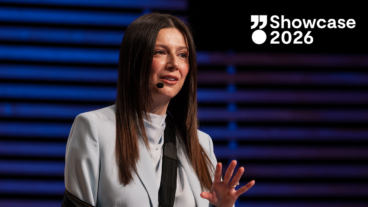
In my main stage keynote at the 2026 Million Dollar Round Table (MDRT) Annual Meeting with 5,000 attendees, I described the progression this way: Today, AI understands words. Next, AI understands the world.
In the AfterNext, AI will apply that understanding as an active participant in the physical world alongside us.
AI Is Learning How the Physical World Works
Large language models learned patterns in language. World models learn patterns in environments, developing an understanding of space, objects, movement, and cause and effect. They allow AI to simulate scenarios, test actions, and learn from the outcomes. Any text prompt or image can become a new training environment, creating an infinite variety of scenarios.
Take Waymo’s World Model, designed for autonomous driving. It can simulate hyperrealistic road scenarios, helping to address the challenge of training for rare, safety-critical events. The system can encounter a possible future, act within it, and learn from the outcome before that situation unfolds in reality on a public road. We can think of this as an operational form of imagination.
For business leaders, world models are instruments of thought. Organizations can build explorable versions of factories, cities, and crisis scenarios before committing resources in the physical world. Teams can preview choices, expose assumptions, and experience possible consequences together before resources are committed or risks become real.
The Future Can Become Something We Rehearse
Every consequential business decision contains an imagined future: a customer using a new product, a team working in a different way, or an investment changing what becomes possible. Until now, these futures have largely been described through forecasts, spreadsheets, and slides. World models give them a new dimension. They allow people to enter a scenario, experience how it might unfold, and revise it before making an expensive or irreversible commitment.
In my MDRT keynote, I brought this idea to life through an exercise I call “postcards from the future.” I invited the audience to imagine receiving a postcard from themselves 5, 10, or 20 years from now. How would they spend their time? What would freedom, security, or success feel like?
For financial advisors, this offers a new way to help clients connect present-day decisions with the lives they hope to lead. AI and immersive technology can turn distant aspirations into images, animations, and environments that people can see and experience. A retirement plan, for example, becomes more than a collection of numbers and takes the form of a possible life someone can step inside, respond to, and begin making real.
The same principle applies across industries. Marketing and retail teams can experience a campaign, customer journey, or store concept before launch. Healthcare professionals can rehearse complex situations while patients visualize treatment and recovery pathways. Manufacturers can train inside rare or dangerous scenarios without putting people at risk. Hospitality companies, real estate developers, and urban planners can help people see themselves in a future destination, home, or community. Across each example, rehearsal creates a shared point of reference. People can see the same possibility, discuss it, revise it, and make decisions with greater confidence.
Embodied AI: Intelligence Enters the Physical World
World models give AI environments where they can learn. Embodied AI brings that learning into physical form. Through robots, vehicles, and even wearable exoskeletons, intelligence can sense its surroundings, learn through experience, and act within the environments it understands.
Humanoid robots bring embodied AI directly into the places where we work and live, from factories and offices to even our homes. 1X’s NEO robot makes the promise of Rosie the Robot from The Jetsons look less like science fiction. NEO is available to preorder for $20,000 USD, with early units shipping with basic autonomy, while unfamiliar or complex tasks can be remotely supervised by a human expert who helps the robot learn.
That human role offers a clue to how embodied AI will enter organizations. For now, these systems will combine machine action with human guidance. For leaders, this begins with identifying which physical tasks AI can take on, where human judgment creates the greatest value, and how work can become safer or more capable as a result. The opportunity is to use embodied AI to increase human capability, choice, and control.
Three Questions Leaders Should Ask Now
1. Where should AI act, and where should humans retain authority?
Embodied AI can act directly in the physical world. Leaders need to decide which tasks it can carry out independently, which decisions remain with people, and who is accountable for the outcome.
2. What could we rehearse before we build?
World models can help teams experience options, reveal assumptions, and test rare scenarios before committing resources. AI and immersive technology can also help clients visualize the outcomes of a decision, product, or service, making future value vivid enough to inspire action.
3. What human experience are we trying to create?
Start with the human need: understanding, connection, safety, or possibility. Then decide which technologies can serve it.
Book Dr. Helen Papagiannis to Speak at Your Event
Dr. Helen Papagiannis is a globally recognized authority on artificial intelligence and a pioneer in immersive technologies who has spent more than two decades designing the very systems now reshaping our world. Through her signature AfterNext lens, she helps leaders step out of reactive mode and see the world before it arrives — translating complex technological change into clear, actionable insights.
Contact us to learn more about Helen and how her AI keynotes will leave your audiences energized, confident, and equipped to lead ahead of what’s coming.