For years, I’ve told the story about climbing Tasmania’s Cradle Mountain 10 months after losing my legs. It’s the story that gave me what I came to call the 70% Rule, a term I first heard from Alan Weiss in 2005 though I was already putting it into practice.
Right from the beginning of my expedition, I knew I couldn’t be certain I’d succeed. There were simply too many unknowns. I could train. I could prepare. But I couldn’t know for sure that I’d make it. Eventually, I reached a point where I was confident enough to begin. If I had to put a number on it, I was about 70% sure. So, I went.
For years, I thought the lesson was simple: don’t wait until you’re 100% certain. You’ll never start. I’m beginning to think I’ve had it backwards. I’d always thought of the 70% as the important number. But perhaps the more interesting number was the other 30%. I hadn’t eliminated uncertainty. I’d simply reduced it to a level I was prepared to navigate.
Certainty Isn’t the Goal
We tend to talk about uncertainty as though it’s something to overcome. Gather more information, build a better forecast, run another scenario, wait for greater visibility, etc. All of those things can be useful, but they can also conceal an assumption: that eventually we’ll know enough for the uncertainty to disappear. Usually, it doesn’t. And when circumstances are changing quickly, waiting for greater certainty can introduce a different kind of risk — the information gets better. But the window to act gets smaller.
So, the question I’ve started asking isn’t, “Am I certain enough to act?” It’s, “Have I reduced the uncertainty enough that I’m prepared to navigate what’s left?” Maybe the more useful capability isn’t certainty at all. Maybe it’s becoming more adept at operating without it, i.e., confidence may come less from becoming certain and more from trusting we can navigate unfamiliar terrain.
This makes me wonder whether our relationship with uncertainty is worth reconsidering. Because there will always be something we don’t know. Something we can’t predict. Something we won’t discover until after we move.
So perhaps the question isn’t how certain we can become, it’s how much uncertainty we’re prepared to accept. Which leads to a more important question: At what point does not acting become the bigger risk?
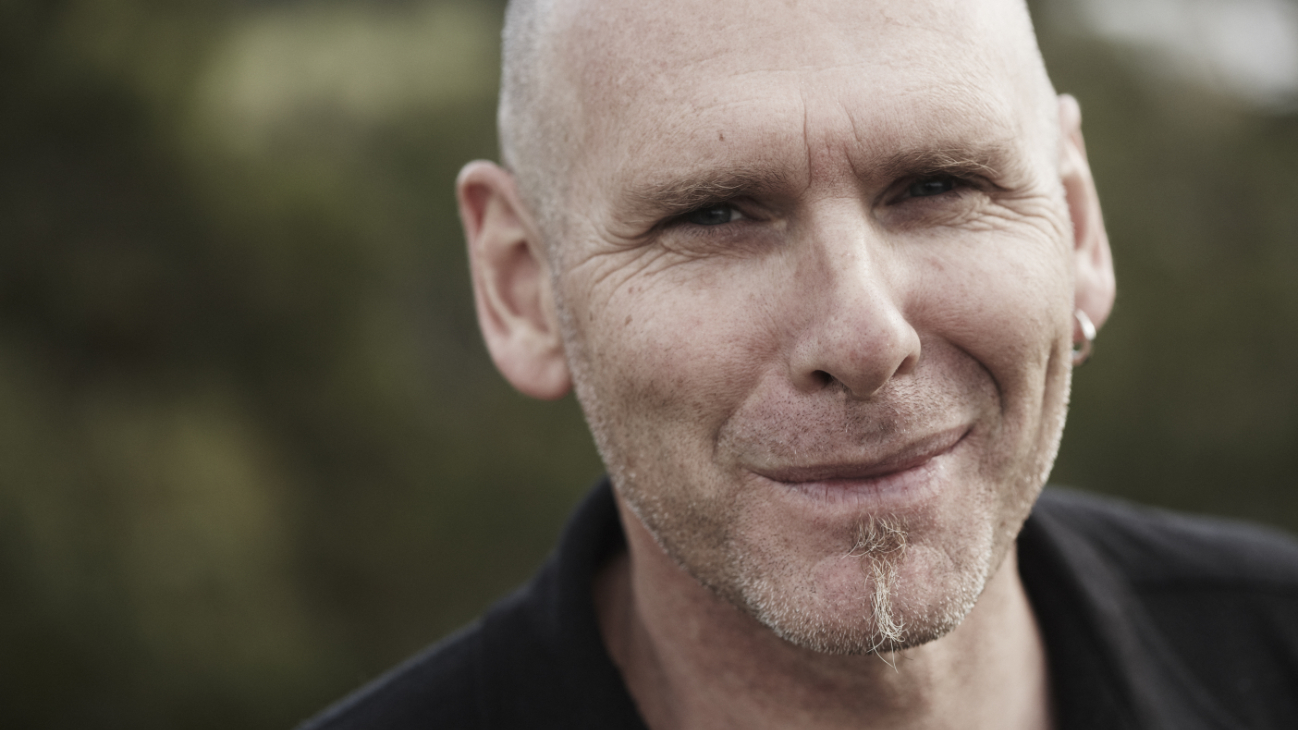
Hire Warren Macdonald to Speak at Your Event
Warren Macdonald knows what it means to face a future that looks nothing like the one you expected — and find a way forward when the path isn’t clear. In April 1997, while climbing on North Queensland’s Hinchinbrook Island, Macdonald became trapped beneath a one-ton boulder in a freak rock fall. He remained trapped for two days before being rescued and ultimately underwent the amputation of both legs above the knee.
Just ten months later, he climbed Tasmania’s Cradle Mountain using a modified wheelchair and the seat of his pants. In 2003, Macdonald became the first double above-knee amputee to reach the summit of Africa’s highest mountain, Mount Kilimanjaro.
For more than two decades, Macdonald has brought those experiences to stages around the world, helping leaders and teams navigate adversity, change, and uncertainty. At the centre of his work is The Perception Gap: the space between what we believe something means and what else might be possible. Through
powerful storytelling and practical insight, he challenges audiences to move forward without waiting for certainty — to see more clearly, build confidence in their capacity to navigate unfamiliar terrain, and adapt when circumstances change.
Contact us to learn more about Warren and how to bring him to your next event.