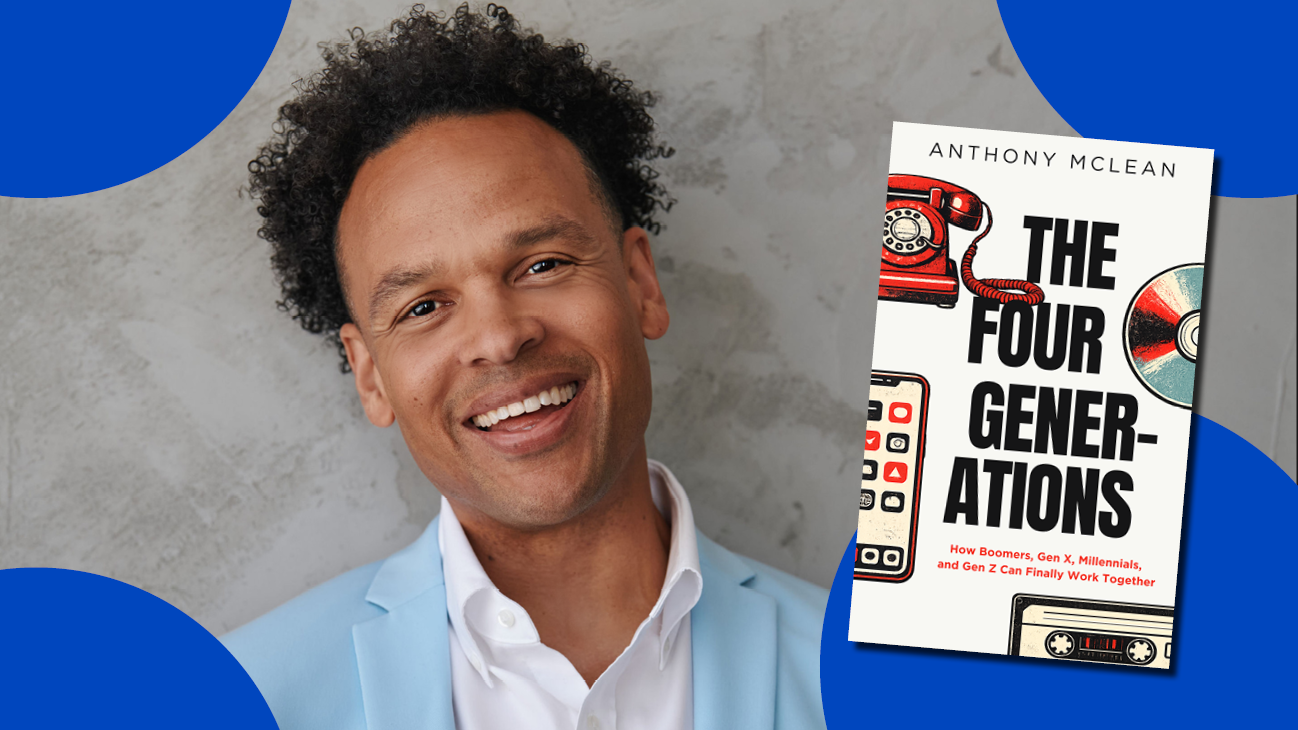
For the first time in history, four generations are sharing the same workplace — and it’s not working. Generational conflict is costing companies $56 billion a year in lost productivity, something workplace expert Anthony McLean has seen firsthand while working with global brands like PepsiCo, AT&T, and Intel.
This experience inspired Anthony to write his new book, The Four Generations, where he uses candour, research, and hilarious stories to show what’s driving the conflict and how to turn it into connection. It’s also serves as the foundation of his popular keynote, “Generational Diversity: How Boomers, Gen X, Millennials, and Gen Z Can Finally Work Together”. Whether you lead a multigenerational team, want to communicate better across age gaps, or just want less friction at work, this book and corresponding keynote will help you build bridges across every generation.
We recently spoke with Anthony about his new book, digging into what’s really tearing generations apart — and what it takes to bring them back together.
When Generations Collide
Speakers Spotlight: What first inspired you to write The Four Generations? Was there a specific moment or workplace experience that made you realize this conversation needed to happen?
Anthony McLean: I’ve been speaking about mental health for years. And whether I’m speaking with corporate leaders, educators, or first responders, I always notice the same dynamic.
When I talk about self-care, older generations roll their eyes. They don’t want to hear another speaker telling them to take bubble baths. When I talk about resilience and showing up on hard days, younger generations cross their arms. They don’t want to hear another speaker telling them to grind themselves into the ground.
As I watched this happen again and again, I started to realize these two groups grew up in completely different worlds. Older generations grew up hearing one message: be resilient. Show up, work hard, keep going. And there’s strength in that. We need it. Younger generations grew up hearing something different: your feelings matter, take care of yourself, protect your peace. There’s wisdom there too.
The problem is that most people lean one way or the other. We need both. Every generation has something to teach us, and every generation has something to learn.
The Most Misunderstood Generation
SpSp: While researching and writing the book, did anything challenge your own assumptions about different generations? What surprised you most throughout the process?
AM: I was surprised to learn how misunderstood Millennials are. Older generations labelled them as entitled and lazy. But Millennials are the ones who created hustle culture. Elder Millennials especially, the ones born in the eighties, grew up without social media or smartphones. They’ve got more in common with Gen X than they do with Gen Z.
And Millennials are struggling. They’re facing home prices that are out of reach, they’re caring for parents who are aging, all while also raising kids of their own. Two-thirds of Millennials now report moderate or high levels of burnout. That’s higher than any other generation. And yet somehow, older generations still label them as entitled. It’s baffling.
Where Companies Go Wrong
SpSp: What do you think companies are still getting wrong when it comes to leading multigenerational teams?
AM: Generational tension in the workplace is tricky because both older generations and younger generations have a valuable point of view. The goal is to manage the tension well enough that both sides feel appreciated.
Communication styles are a great example. Older generations often favour face time and phone calls. Younger generations often prefer messages and emails. Neither is wrong. But when a company forces everyone into one style, half the team ends up frustrated.
So, with communication styles, build a game plan. Sit down together and agree on basic ground rules for how you connect. Messages for non-urgent updates. Phone calls or in-person for true emergencies or sensitive feedback. When everyone knows what to expect, it eases some of that tension.
Building Bridges Across Age Groups
SpSp: Your book offers practical ways for generations to better understand and communicate with one another. What are some of the most effective strategies leaders can use to build stronger collaboration across age groups?
AM: Two things come up more than anything else when I talk to leaders about multigenerational teams.
The first is feedback. I hear versions of the same story constantly. A manager gives a younger employee feedback and the conversation derails. The employee shuts down or gets defensive. The situation may escalate to HR. Now the manager feels like the young employee is untouchable.
Here’s what I tell leaders. Make sure the feedback is about the work, not the person. Younger workers are incredibly attuned to how feedback is delivered. The same message lands completely differently depending on whether they feel valued or judged. When young people feel respected, they will take hard feedback and run with it.
The second thing I hear constantly is that Gen Z lacks basic workplace skills. Some leaders have gone so far as calling them unemployable. But most of Gen Z entered the workforce during the pandemic. They missed the hallway conversations, the informal shadowing, the moments where you watch a senior colleague handle a difficult situation. Nobody taught them this stuff. The unwritten rules need to be written down. Create a simple document that describes your culture — what does on time mean here? How does feedback work? One company called theirs “How We Work Here.” Their Gen Z employees said it was the most useful thing they got in onboarding.
Practice Empathy
SpSp: If readers walk away from The Four Generations with one lasting takeaway about working across generations, what do you hope it is?
AM: The takeaway I hope people carry is something I learned from a student I met. He was half blind, and kids bullied him in gym class because he couldn’t always participate. These bullies were making his life miserable, so his teacher came up with a plan. She created a pair of glasses that showed the world exactly the way he saw it. These kids put the glasses on and tried to catch a ball or run across the gym. And once they saw the world through his eyes, they never made fun of him again.
That’s the whole book in one story. Every generation has a version of those glasses, a set of experiences and values that shaped how they see everything. And when you take a moment to put them on, the person who seemed lazy or out of touch or impossible to work with starts to make a lot more sense. As my wife Susie always says, it’s hard to dislike someone you understand.
Hire Anthony McLean to Speak at Your Event
If generational conflict is holding your team back, Anthony McLean knows how to fix it. A master storyteller with a gift for turning workplace tension into connection, he leaves every audience with practical tools and a new way of seeing the people they work with every day.
Contact us to learn more about Anthony and how to book him for your next event.