
In 2026, leaders find themselves navigating unprecedented complexity with technological advancement, ongoing global volatility, and shifting employee needs and expectations intersecting in increasingly nuanced ways.
To help you prepare for what’s ahead, we asked five of our top leadership keynote speakers: What workplace trends should leaders watch and prepare for in 2026? Their insights reveal critical shifts in how to lead, collaborate, and create resilient organizations in an era of constant change.
This is part two of a three-part series sharing “trends to watch” in 2026. Exploring three key areas — global political and economic shifts, the workplace, and AI/tech — we’ve compiled tips, trends, and advice from some of our leading speakers to help prepare you for the challenges and opportunities ahead.
The Fog of More
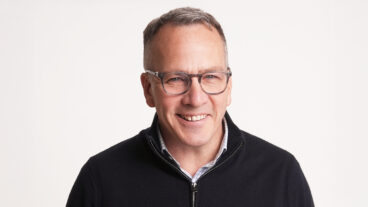
Ron Tite
Purpose-Driven Leadership and Marketing Expert
Things may feel a wee bit uncertain heading into the new year, but it’s not because we lack opportunity. Quite the opposite, actually. We’re drowning in it.
Welcome to the “fog of more”. More data. More tools. More platforms. More opinions. More everything. But all that more isn’t helping, it’s hurting. Decisions are slower. Accountability is murky. And clarity has pretty much vanished.
Oh, you tried to help by being more collaborative. You invited more voices. Welcomed more opinions and sought out more perspectives. All good things of course, but the result is everyone wants a voice, but no one wants the final word. Instead of using all the more to inform better decisions, we’re using it to delay making them at all.
Leadership isn’t crowdsourced. It’s decisive. In 2026, the best leaders will move through the fog. They’ll gather insights, make the decision, and move with clarity, not consensus. Clarity doesn’t come from more questions. It comes from making the call.
It’s 2026. If you want to lead through uncertainty, be the one who says: “Thanks for the input. We’re going this way.”
Ron Tite is an award-winning advertising writer and creative director who has worked with some of the world’s most respected brands, including Google, Intel, Microsoft, Volvo, Walmart, and many others. A globally in-demand speaker, he speaks to leading organizations about purpose, creativity, disruption, and leadership.
The Emergence of Neuro-Leadership
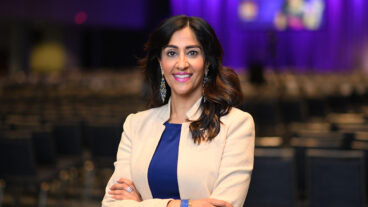
Dr. Shimi Kang
Leading Expert in Change, Leadership, Innovation, and Wellness
2026 requires leaders to move beyond adaptation to anticipation. The ongoing convergence of AI and automation is no longer a trend; it’s a foundational shift demanding we invest aggressively in our human software — our creativity, connection, and adaptability.
We must counter the entrenched “great detachment” (disengagement) by elevating human connection and purpose. The Future Ready Minds framework based on the three-brain model of P.O.D offers the strategic mandate:
- PLAY: Accelerate AI proficiency and mandate time for creative risk-taking, turning cognitive friction into organizational innovation.
- OTHERS: Codify a culture of psychological safety and radical transparency. Use hybrid time strictly for high-value, empathetic collaboration to cement team trust.
- DOWNTIME: Institutionalize digital boundaries and active rest. This isn’t a perk; it’s a resilience metric, ensuring sustained focus and high-quality output.
Success in 2026 hinges on leading with neuroscience: cultivate P.O.D. to unlock your team’s fullest, future-ready potential.
An award-winning, medical doctor, researcher, and expert on the neuroscience behind innovation, leadership, and motivation, Dr. Shimi Kang draws on 25 years of clinical experience and extensive research to show audiences how to cultivate key 21st century skills, including resilience, connection, adaptability, creativity, and more.
Thoughtload and Declining Productivity
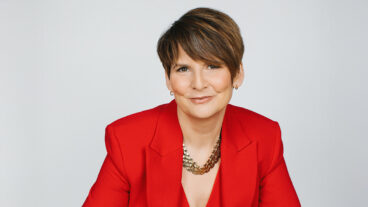
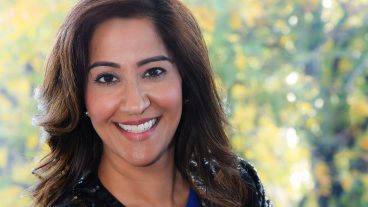
Liane Davey
Expert on Building Effective Teams, Improving Communication, and Increasing Leadership Effectiveness
I’m paying attention to how the growing sense of overwhelm is detracting from productivity, innovation, and collaboration. But it’s not the workload that’s causing people to burn out. In fact, most people I speak with would be thrilled to focus on their work. It’s not an unmanageable workload; the problem is an unmanageable thoughtload.
Thoughtload has three parts: first, the cognitive demands on people’s attention are too high; too many meetings, too many emails, too many priorities. Second, the emotional burden of life in an emotionally dysregulated society is causing people to feel anxious and threatened, and emotional contagion means those feelings spread among colleagues. Finally, employees and leaders are trying to cope with that heavy load while physically and mentally depleted.
If we don’t help people reduce their thoughtload and become more resilient to constant bombardment, our concerning productivity trends will only get worse.
Having worked with organizations, including Fortune 500s, across the globe, helping teams from the frontlines to the boardroom, Liane Davey has developed a unique perspective on the challenges that teams face — and how to solve them. As a keynote speaker, she delivers the perfect combination of education and entertainment to help leaders make an immediate impact on their organizations.
The Shift from Leaders as Mechanics to Nurturers
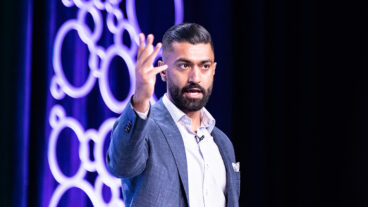
Hamza Khan
Future of Work and People-First Leadership Expert | Bestselling Author
Leaders in 2026 must continue the challenging but imperative work of reinventing leadership itself — especially what managers are responsible for day-to-day — at the intersection of humanity, technology, and performance.
Across global research from the likes of Gallup, Deloitte, and Microsoft, a clear signal has emerged: organizations that treat people as costs to control fall behind, while those that carefully design work around trust, learning, and collaboration consistently outperform. As AI increasingly takes on executional tasks like analysis, coordination, and routine decision support, leadership matters less as command and oversight, and more as co-creating the conditions for regenerative performance.
I often describe this shift as moving from leaders as mechanics to leaders as gardeners — designing organizations for long-term health, adaptability, and shared stewardship, where human and AI capabilities strengthen one another over time. Under pressure, many leaders still default to making decisions about people without them. The leaders who thrive this year and beyond will ground their teams by asking one simple, human question: What do you need to do your best work right now?
Hamza Khan believes the future of work is more human, not less. He’s on a mission to help organizations revolutionize leadership and rehumanize the workplace by adopting a bold “people first” approach. As a two-time bestselling author and multi-award-winning entrepreneur, he empowers audiences to amplify human potential through collaboration and technology while prioritizing long-term impact.
Neutrality, Civility, and Viewpoint Diversity in a Polarized World
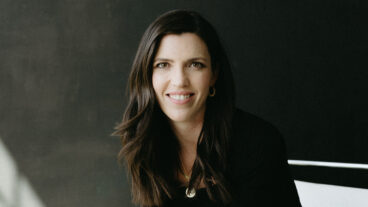
Morgan Hamel
Expert in Business Ethics and Ethical Leadership
Over the past year, I’ve noticed a subtle but meaningful shift across boardrooms, executive teams, and professional organizations: a renewed interest in neutrality, civility, and viewpoint diversity. Not neutrality as indifference. Not civility as silence. And not viewpoint diversity as a performative checkbox. Rather, neutrality as institutional discipline in an era of heightened moral polarization.
The past decade trained organizations to signal values quickly, publicly, and often under pressure. Social media accelerated this instinct, rewarding speed and certainty over reflection and context. The result, for many organizations, has been rising internal tension, external backlash, and a growing sense that trust is harder to earn and easier to lose than it once was.
There is a growing appreciation for the role organizations play as boundried hosts of difference — places where people with genuinely divergent views must still work, govern, and serve the public together. In that context, neutrality is less about “not caring” and more about knowing when not to take a public stand so that companies can remain focused on their core mission and space for thoughtful disagreement can remain intact.
Civility fits naturally alongside this shift. Not the brittle, tone-policed version that shuts conversation down, but a sturdier form: the capacity to stay in dialogue when issues are uncomfortable, identity-charged, or emotionally loaded. Civility, in this sense, is a governance skill.
Viewpoint diversity is the third leg of the stool — and perhaps the hardest to practice. It asks leaders to move beyond surface-level inclusion and wrestle with the reality that people may interpret the same issue, evidence, or event very differently. Preserving room for those differences, and being clear about which conversations and topics belong where, is being increasingly recognized not as a risk, but a form of organizational resilience.
None of this is easy. Neutrality can feel unsatisfying in moments that call for moral clarity, civility can feel slow when urgency is high, and viewpoint diversity can feel messy when alignment is prized. But in a polarized environment, these capacities may be exactly what allow organizations to remain credible, trusted, and functional over the long term.
With 20+ years of experience in corporate ethics and ethical entrepreneurship alongside a master’s degree in applied ethics, Morgan Hamel offers audiences a business-focused, ethics-rooted perspective on reputation management. She helps leaders navigate a new era of business ethics and reputational risk, diving deep into what ethical leadership looks like in an era of polarization, complexity, and change.
Hire a Leadership Expert to Speak at Your Next Event
The workplace trends shaping 2026 demand a new kind of leadership — one grounded in clarity, adaptability, and human connection. Our leadership keynote speakers bring the insights and practical strategies your teams need to navigate complexity, reduce overwhelm, and create cultures where both people and performance flourish.
Contact us to learn more and to book your 2026 event.