For the first time in modern history, five generations are working side by side. Boomers are delaying retirement. Gen Z is flooding the entry level. Gen X and Millennials are filling the leadership pipeline. And Generation Alpha is already knocking at the door.
The result is a workplace of extraordinary depth — and extraordinary friction. Different life experiences, different relationships to technology, different instincts about hierarchy, feedback, and culture. Many leaders are feeling these tensions and wondering how best to navigate them. The problem isn’t that these differences exist — it’s that we’ve fundamentally misunderstood what they mean.
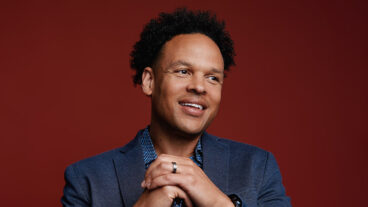
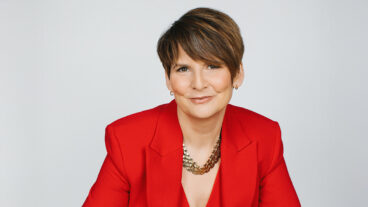
We’ve rounded up four leading experts on multigenerational teambuilding to weigh in on this modern-day leadership challenge — researcher Ilona Dougherty, strategist Max Valiquette, author and speaker Anthony McLean, and leadership expert Fahd Alhattab. Through sharing their insights, they challenge some of the most widely held assumptions about generational differences and offer leaders a better way forward.
The Differences Are Real — Just Not How You Think
A researcher, social innovator, and co-creator of the Youth and Innovation Project, Ilona Dougherty has spent her career studying intergenerational dynamics. The first thing she wants leaders to understand is that our brains work differently depending on our age. This isn’t about attitude or work ethic. It’s biology.
“We need to stop thinking of young people as immature and old people as past their prime,” she says. The science is more nuanced than that — and more useful.
Young people between 15 and 29 are wired for bold problem-solving. Heightened neuroplasticity makes them naturally creative, risk-tolerant, and inclined to challenge the status quo, Ilona says. They look at an existing process and ask: why are we doing it this way? Older workers bring a different — and equally essential — set of strengths. Emotional intelligence, contextual knowledge, and the ability to navigate organizational complexity all deepen with age. “It’s one thing to have a bold idea,” Ilona says. “It’s another to implement it.”
In other words, what looks like conflict is often something more useful: two complementary strengths that haven’t been given the right conditions to connect, Ilona says. The real barrier is fear, she adds. Older workers fear irrelevance — the sense that if new ways prove better, what they’ve built stops mattering. Younger workers lack context — they’re not disrespectful, they’re working without the institutional knowledge that makes bold ideas executable. When those fears go unaddressed, teams stall. Not because generations are incompatible, but because no one built the bridge.
The Danger of Getting It Wrong
In the absence of understanding these biological differences, organizations have filled the gap with something far less useful: generational stereotypes.
Max Valiquette has spent nearly three decades studying generational behaviour. A communication and transformation strategist, he previously founded Youthography, a pioneering youth‑insights firm, where he had a front row seat to the evolution of understanding generations. Today, he is a sharp critic of generational labels.
“We’ve built an entire consulting industry around the idea that Boomers are loyal, Gen X is cynical, Millennials are entitled, and Gen Z can’t look up from their phones,” he says. “It’s a tidy framework. It makes for good conference slides. And it’s mostly wrong.”
What surprises him the most is how durable the myths have been even as the evidence has mounted against them. Workday’s analysis of over a million employees globally found that what actually drives engagement doesn’t differ meaningfully between Gen X, Millennials, and Gen Z. Gensler’s 2025 Global Workplace Survey of 16,000 workers across 15 countries found that core reasons for coming into the office are strikingly consistent across age groups.
The reason the labels persist, Max says, is because they’re convenient. “They give us permission to stop being curious about the actual human being sitting across the table.” When a manager walks in assuming their Millennial employees need constant praise and their Boomer employees can’t adapt to technology, they’ve stopped managing people. They’re managing caricatures. There’s a word for using someone’s age as a shortcut to assess their values and potential. “It’s called ageism,” Max says. “We just don’t call it that when it comes wrapped in a generational label.”
How Generational Friction Shows Up on Teams
The damage these stereotypes can cause don’t just stay in the abstract. It shows up in the day-to-day workings of teams — in the moments where collaboration either takes shape or breaks down.
An acclaimed keynote speaker with a knack for turning workplace challenges into opportunities for connection, Anthony McLean is the author of the forthcoming book, The Four Generations: How Boomers, Gen X, Millennials, and Gen Z Can Finally Work Together. His book is informed from years spent watching those moments unfold in front of him. He noticed two main patterns repeating themselves.
1. The Feedback Clash
An older manager gives a younger employee the kind of direct, blunt feedback they were trained on. The younger employee shuts down because it feels harsh. The manager reads it as sensitivity. The employee experiences it as an attack.
2. The “Why” Problem
As Ilona mentioned, younger employees are more likely to question the status quo — but that instinct doesn’t always land well. When a Gen Z employee asks why things are done a particular way, Anthony says, a senior colleague may hear disrespect and shut it down. The result is a team where people stop speaking up — and the conversations that could move things forward never happen.
Generational conflict costs companies $56 billion a year in lost productivity, Anthony adds. That’s more than 5 hours per employee every week. According to Gallup, when different generations work well together, teams are 21% more profitable. That gap is a leadership problem, not a people problem.
The Performance Cost of Standing Still
Fahd Alhattab, the founder of Unicorn Labs and a leadership strategist with 15 years of experience building and scaling teams, echoes this performance reality. Most teams start as 1+1=2, he says. Add people together and you get what you paid for. But without deliberate effort, teams drift. They become 1+1=0 — less than the sum of their parts. In a multigenerational environment, that drift accelerates because the team dynamics are more complex.
The root cause is rarely the people. It’s the absence of intentional leadership. “When we label a generation, we dismiss our responsibility to develop them,” Fahd says. A great leader amplifies the people around them. A poor one diminishes them. “You can have 10 talented people on your team, pay for all 10, and — because of disengagement and a lack of trust — only get 50% of their real capacity.”
What Effective Leaders Do Differently
So what does it actually take to lead a multigenerational team well?
1. Get Curious About Individuals, Not Generations
The leader’s job is to create enough psychological safety that both sides of the generational divide feel seen, not threatened, Ilona says. This starts by asking people what they need rather than assuming you already know, Anthony says. In other words, stop asking what generation someone belongs to and start asking what stage they’re at. What does a great day look like for them? What do they wish you understood more about how they work?
2. Rethink How You Give Feedback — And How You Receive Challenge
Anthony recommends David Yeager’s approach to providing feedback — the “mentor mindset”. It means validating a person before giving them feedback. You still hold people to a high standard but make it clear that you believe in their ability to meet those standards. The same openness applies when a younger employee questions why something is done a particular way — that instinct to challenge is often the instinct to improve, and leaders who receive it well are the ones who benefit from it most.a
3. Build Culture Around What Everyone Shares
Research shows that no matter their age all workers value meaningful work, growth opportunities, fair recognition, and psychological safety, Max says. These aren’t generational preferences — they’re human ones. Build your culture around those universals, then flex at the individual level. Some people want mentorship; some want autonomy. Some want public recognition; some want a quiet word. That’s not Boomer versus Zoomer. That’s just people.
4. Design Connection — Don’t Leave It to Chance.
Proximity used to create relationships organically. It doesn’t anymore, especially in hybrid and remote environments. Build structured, cross-functional mentorship that sits entirely outside the management chain, Fahd says — where junior employees get lived-experience wisdom, senior employees stay current, and both build real bonds to the organization. The exchange has to be genuinely reciprocal, with both parties as learner and teacher, Max adds, to break down hierarchy without destroying respect.
The Leadership Opportunity
There has always been friction between generations. There always will be. But the leaders who navigate it well aren’t the ones who eliminate the differences — they’re the ones who stop misreading them.
When leading multigenerational teams, the goal isn’t harmony for its own sake. It’s collaboration that multiplies, where the boldness of the young and the wisdom of the experienced produce something neither could build alone. That’s not a generational problem. It’s a leadership opportunity.
Book a Multigenerational Leadership Keynote Speaker
If generational dynamics are a challenge in your organization, our roster of leadership experts provide the insights and tools to help. Ilona Dougherty brings original neuroscience and longitudinal research on intergenerational teams. Max Valiquette challenges the conventional wisdom on generational labels with sharp data and two decades of insight. Anthony McLean turns the friction of multigenerational workplaces into practical tools for connection and performance. And Fahd Alhattab gives leaders the framework to build high-performing teams that get the best out of every generation.
Contact us to learn more and how to book one of these experts to speak at your next event.