Trust has become one of the scarcest resources in the modern workplace, yet it’s one of the biggest drivers of long-term business success. It is being quietly eroded by the rise of AI, rapid change, and a growing sense of disconnection. But what was once lost can be rebuilt.
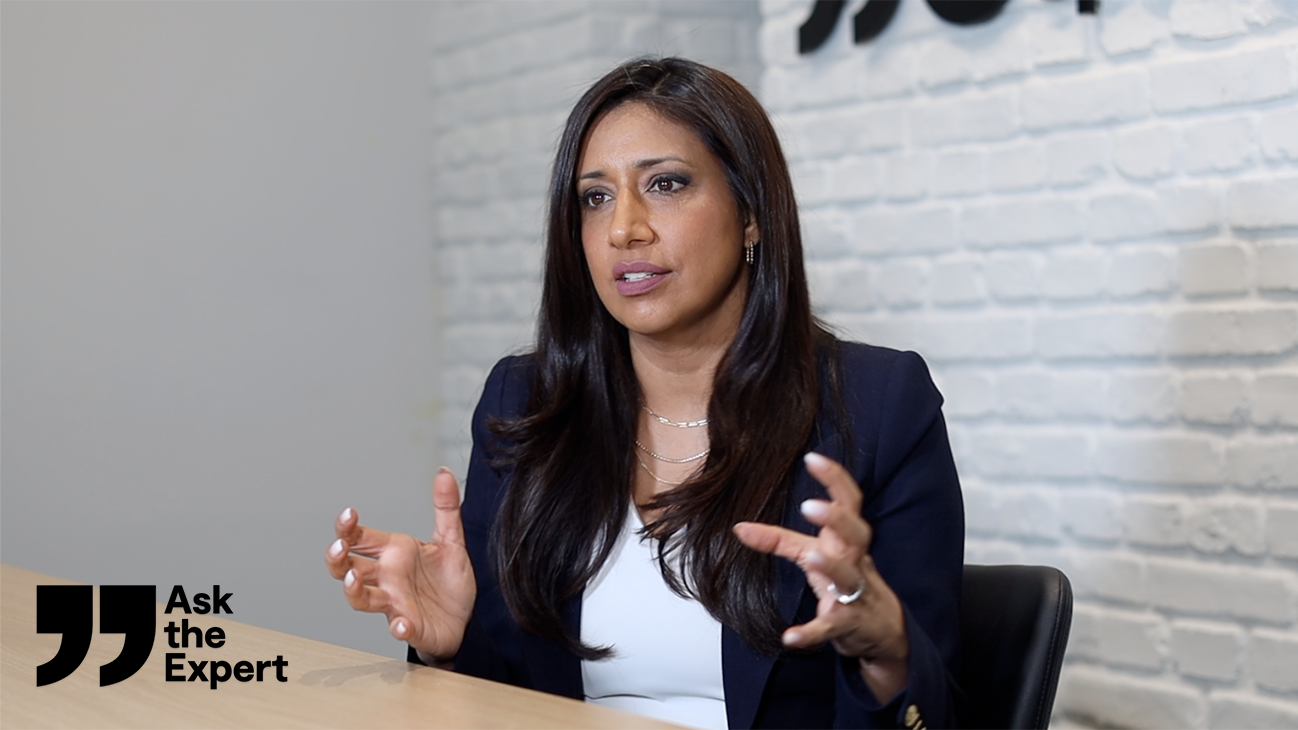
As a national news anchor, Farah Nasser spent 25 years focused on one goal: to earn trust — nightly, live, and under pressure. Today, as a keynote speaker, she helps Fortune 500 leaders and teams build trust that lasts by leading with the empathy and authenticity that AI can’t replace.
So, we asked Farah, as part of our ongoing content series, Ask the Expert: what’s quietly eroding trust at work and how can leaders win it back? Here’s what she had to say.
Answers have been edited for length and clarity.
Watching Trust Erode in Real Time

I was a news anchor and journalist for many, many years and here is what I think happened with the trust deficit: we weren’t looking inside ourselves. I’ve done a lot of therapy in my life, so always try to look inward. Why? Why is it like this?
During the pandemic, we were seeing trust erode in real time. As a news anchor, I had a front row ticket to this. We went from people in the field saying, “Can’t wait to watch you on the news tonight, news lady,” to “F you, news lady,” and being spit on. We saw it happen. It’s because we weren’t being honest about how we were getting the news, what we were seeing, and what we didn’t know.
There’s this unwritten rule when you’re a news anchor to project confidence, to act like you know. But you’ll notice now that a lot of independent journalists are becoming more popular, and it’s because they’re real. People are attracted to real. They don’t want the perfect polished news anchor who’s just going to sit there and tell them everything. They want to have a conversation. They want to know that they can trust you because you’re real and imperfect.
It’s impossible in this world to be perfect, to know everything, and to have all the answers. How can we? Information is coming out so fast. I think there’s value in that imperfection. I call it strategic imperfection. When you can show that to the people around you, show them that you’re a real human and can be trusted, then they can show you their imperfection, and that’s how we connect as people. It’s something that’s happened for millennia, but it’s something we’ve forgotten in this AI age that’s turned perfectionism into a religion.
Authenticity is the antidote
I believe we’re in this post-trust world, but I think we can get trust back. Gone are the days of these leaders and managers who used to saunter into the boardroom, reeking of ego and money. You didn’t ask them questions, you didn’t know anything about their personal life. They just told you what to do, and you just wanted to impress them.
Now employees are looking for real leaders. Authentic leadership has never been so important. When leaders can be themselves, when they can pull down that armour and actually be honest about how things are working and their struggles, that’s how people connect with them.
So, I think there is a way to get trust back. Authenticity is the antidote to this post-trust culture we’re in. The more we can be real as leaders, as people, as parents, as humans, the more we connect with other people. Because when you’re authentic, you give others a permission slip to also be authentic. That’s where the conversation happens. That’s where the vulnerability opens up. And that’s when you can really connect and trust somebody.
Silence Isn’t Agreement
What I’ve seen a lot of leaders do is mistake silence for agreement. There’ll be some sort of new format or new expectations rolled out, maybe some automation or AI coming in, and people are just sitting around a boardroom table, listening and silent, being told what they have to do next. But they’re not agreeing, because then they have the meeting after the meeting in the hallway where everyone’s just like, “What was that? How the heck are we going to do that?”
When we’re not honest about the anxiety that exists and we ignore it, we do so at our own peril, because it just gets bigger. AI anxiety exists right now. People are worried. They’re worried about an algorithm taking their jobs, about a recession looming. They’re worried about the world, about trade, and what’s going to happen to our national identity protectionism. There’s so much fear and worry and if you don’t address it and pretend it’s not happening, it just gets bigger.
Instead, a leader can say, “Look, I’m worried too. I have the same concerns you do. But for us to succeed as an organization, we need to do X, Y and Z, and let’s do it together. I want to do this with you. We’re a team.”
Authenticity in practice
Let’s take for example a return-to-work mandate. A leader could say, “We need synergy in the office. You need to come to work four days a week, and this is how it’s going to be. Or, the leader can say, “Look I get it. I know you have a two-hour commute. I know it’s hard to be here. But I’m finding that because we’re not interacting, our work is suffering. Because we’re not ideating in the same room, we’re seeing a difference in the output. What’s the solution? How can we make that happen? Because I get it. I love being at home too, and being able to go to my kid’s baseball game, but how do we do it in a way that works for all of us?”
There’s a totally different mentality when you’re just telling your team members, “This is how the new mandate’s going to go,” and saying, “I get it. I’m with you. I have the same concerns you do. But how do we do this? How do we get the same output?” Because the results and the goals are the same.
More from Farah Nasser
A two-time TEDx speaker, Farah is a go-to voice on the intersection of humanity and technology, with topics spanning trust and authenticity, empathetic leadership, and psychological safety.
How is AI putting the spotlight back on human intelligence?
Is society under threat from a growing empathy crisis?
How can workplaces stay psychologically safe as AI reshapes our roles?
Hire Farah Nasser to Speak at Your Event
An Edward R. Murrow Award-winning journalist and anchor of one of Canada’s top three national newscasts, Farah Nasser spent decades sitting across from prime ministers, global CEOs, and decision-makers decoding what makes people listen, trust, and act. That experience has given her a rare insight into what builds credibility under pressure, one she now brings to stages worldwide as a globally recognized keynote speaker on the human side of change and the AI revolution.
Contact us to learn more about Farah and what she can bring to your next event.