Cynicism is one of the most corrosive forces facing society today, eroding trust not just in individual leaders, but in institutions as a whole. Left unaddressed, that erosion hardens into anger, backlash, and a growing distance between experts and the people they’re meant to serve.
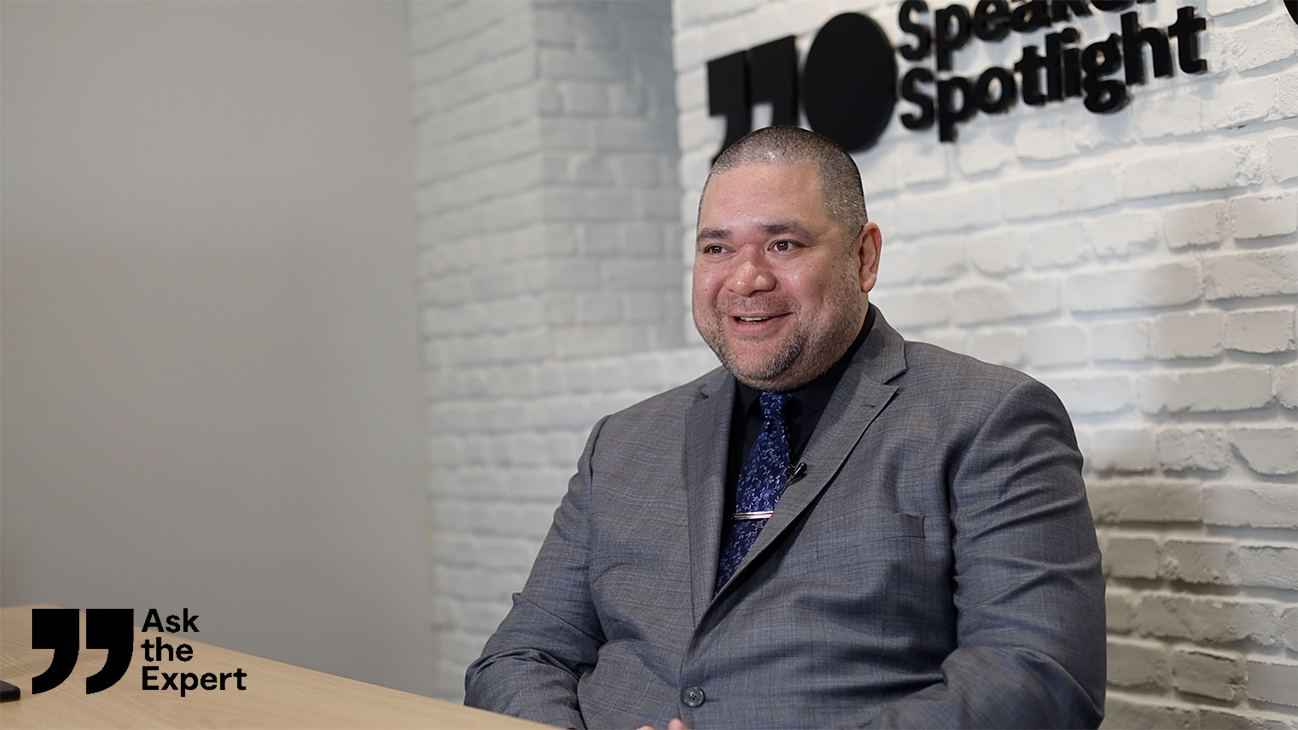
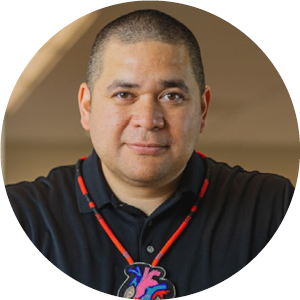
Named Maclean’s Top Healthcare Innovator, Dr. Alika Lafontaine has been at the epicentre of health care system transformation for almost two decades. He is the first Indigenous physician and the youngest doctor to lead the Canadian Medical Association (CMA) in its 156-year history. From co-leading the Indigenous Health Alliance to founding Safespace Networks and leading the CMA’s national apology to Indigenous patients, Alika has built a career on the slow, unglamorous work of rebuilding trust in broken systems — the same insight at the heart of his new book, The Outrage Cure, which explores how cycles of anger and outrage erode trust and how individuals and systems can find their way back.
As part of our ongoing Ask the Expert series, where we put the questions keeping business leaders up at night to the people best positioned to answer them, we asked Alika — how do you break out of a cycle of cynicism and rebuild trust? Here’s what he had to say.
Answers have been edited for length and clarity.
How Can You Combat Cynicism and Rebuild Trust?
I think the cynicism we see today is split into two parts. The first is grounded in the reality that people haven’t come through on the promises that they’ve made. People have lost trust in each others ability to actually have the skills to do things and that people are actually making decision in a good way, ethically or however you want to frame it.
The other part is that we live in a world where we’re used to things happening fast. We’re being told, over and over, that everything should be a smooth experience. You press a button and a car shows up. You have a timer on your phone that tells you when the doctor is going to see you. But that’s not the reality of how things actually work because you’re not the only person using those systems.
When you’ve worked in system change long enough, you start to realize just how hard it is to make things feel smooth. It takes a whole lot of work. What’s really happening is that a lot of the friction we used to feel when we go through things have just been hidden. They’re not really gone.
So I think the solution to cynicism really lies in two places. First, it’s coming through on those promises and showing people you’re confident and credible. Secondly, it’s helping people realize that a lot of these problems are more complex than they think.
For example, take the introduction of artificial intelligence in health care. There’s this idea that you just talk into your phone and suddenly you’re having surgery. But there are a lot of moving pieces in between. I think that’s what we’re missing. We’re being sold a version of reality that feels a lot smoother than it is. The complexity is being hidden away, and we have to reveal it.
The Dangers of Cynicism
Left unresolved, that cynicism turns into anger — and anger is where a lot of today’s misinformation and backlash against institutions actually comes from. It’s a dynamic Alika has seen play out again and again, and one he unpacks further in his book. Here’s his take on why it happens:
We exist in a world where we’re hearing a lot of different things about what’s true and what’s not, and health care is probably a place where those tensions converge in a really important way — misinformation around vaccines, confusion about the line between health care and wellness, people claiming that treatments proven to work over years don’t work, or trying to sell you a product that promises to solve all your problems.
We’re at a point in health care where the services we provide have become so commoditized that, in my opinion, there’s a lot of incentive for people to muddy the waters — to get people to act and behave in ways that, for the most part, aren’t really in their own best interest.
Intuitively, a lot of people look at that and ask: why don’t you just trust the experts? But one of the things that’s really important to remember is that when people behave a certain way, it always makes sense to them. I write about this in my book, The Outrage Cure. If you trace back a lot of the misinformation that has really taken root, it’s because people have been angry for a long time. They’ve been asking for help to solve problems, and for the most part, I don’t think people have shown up.
As a result, that anger takes on a more intense form where they start to get outraged. Then, instead of continuing to call for help, people start to call for reform. They call for retribution. That’s part of what’s driving the backlash against experts right now, whether that’s physicians or otherwise — people don’t feel like those experts have solved the problems they’re seeing day to day.
Rebuilding Trust Starts with Connection
The toughest part of finding a way through this is that it’s not just about solving problems anymore. It’s about establishing trust. It’s about establishing connection.
For example, in healthcare, look at people’s relationship with their family doctor. Twenty years ago, you’d sit down and have a 15- or 20-minute conversation with your doctor. They’d get to know you — they’d learn the name of your dog, find out about your future plans, whether you had kids on the way or were shifting jobs. You really got to know each other as people.
Now we live in an age of the five-minute churn. People come in, they’re allowed to share one problem, that problem supposedly gets solved, and then they’re off again until they come back into the machine. People don’t like that. They don’t appreciate what this hyper-efficiency has done — stripping away connection and emotion.
When you’re looking at any of these problems, especially misinformation, we don’t lean in enough to helping people feel seen and feel connected again. And that’s going to require a lot of inefficiency, to be honest, or maybe a reframing of value. It’s not just about getting things done. It’s also about how people feel, and building the kind of social capital you can reinvest down the road.
These are all common human experiences. They’re solvable, as long as we see the actual problem that’s there.
More from Dr. Alika Lafontaine
As a physician, former CMA president, and author, Alika speaks with firsthand authority on the issues shaping society today — from health care and beyond — and the human dynamics behind them. Watch more from him below:
Why did you write your new book, The Outrage Cure?
Do Canadians have a complete understanding of the healthcare system today?
How do we balance the risks of AI as it increasingly enters the health realm?
Hire Dr. Alika Lafontaine to Speak at Your Event
If you’re looking for a speaker who can help your audience navigate broken trust and lead through uncertainty, Dr. Alika Lafontaine brings the same clarity to the stage that he brings here. He leaves audiences with a practical framework for rebuilding trust when systems, relationships, or the social contracts that used to hold them together start to break down.
Connect with our team to book Alika for your next event.