Uncertainty has become the defining condition of modern business. As leaders find themselves constantly navigating shifting technology, evolving workplace expectations, and relentless disruption, the instinct in moments like these is often to freeze — to put your head down and hope the ground stops shifting. But some leaders and teams find a way through, not by waiting for certainty to return, but by learning how to move forward without it.
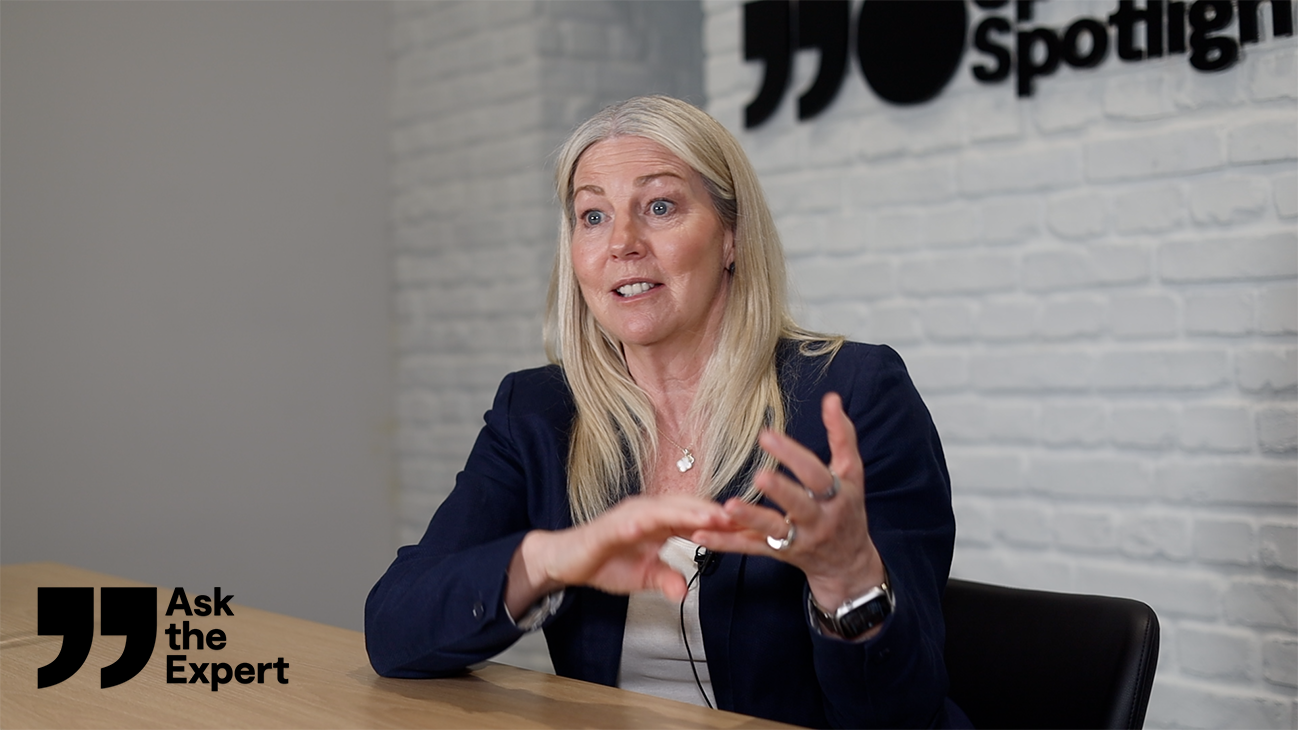
Yvonne Camus has spent more than two decades studying exactly how that happens. A high-performance expert and former member of Team Canada’s expedition racing team, she has spent her career translating lessons from extreme endurance racing and elite athletics into practical strategies for leaders navigating pressure, change, and uncertainty. Her presentations blend adventure storytelling with actionable takeaways on resilience and high performance — the same insights she’s brought to organizations like GE, GM, Walmart, and TD Bank.
As part of our ongoing Ask the Expert series, where we put the questions keeping business leaders up at night to the people best positioned to answer them, we asked Yvonne — how do the best leaders and teams respond when everything feels uncertain? Here’s what she had to say.
Answers have been edited for length and clarity.
How Can Organizations Transform Uncertainty into Opportunity?

There are two ways I’ve witnessed people or organizations react when experiencing high degrees of uncertainty. One of the best examples where I’ve seen this in practice is when a town rerouted their annual Thanksgiving Day parade. Vendors along the streets of this parade saw it as a big driver of business. So when it got rerouted and was no longer coming past their location, a lot of the retailers put their head down and had a woe-is-me reaction — how am I ever going to get people to come back to my store?
Others approached it differently and brought the store to the parade, hosting pop-ups. They looked at the situation and said, “Okay, this has changed and there may be anxiety and uncertainty about that, but what could we do that will still allow us to be successful?”
What Elite Teams Do Differently
You see the same thing in eco-challenge races. The majority of teams quit because they can no longer see the finish line and this prevents them from functioning as a collective. The teams that succeed are able to do so because they expand the conversation.
When we’re under pressure — and this is actually a scientific component of performance — our thinking gets small, and we drill down into single ideas that we think might help in the moment. Knowing that, going into a challenge as a team, you have to force yourself to see with your peripheral vision. This is the same for leaders and teams right now. When you are in a situation you’ve never experienced before and have no idea what to do, if you don’t broaden out and engage your peripheral vision by asking, “What opportunity is there here for us? Where do we pivot? Where do we look? How do we solve for this?” — you’re going to get stuck.
How to Get Unstuck
One of the things my team did during competition was build a component into our problem-solving process that was just about generating ideas — we would throw any idea at a challenge. Slowly, through this practice, the physical nature of how you start talking about change changes. At first, you may be distraught over the fact that you can’t figure something out. But when you start throwing ideas out, you start to have this sense of, “Okay, maybe we can do this. Let’s work with this.”
Eventually, whether it’s the right idea or not — and often the original ideas are not — it at least gets you moving. Then you let it evolve. So sometimes just getting out of that inertia and into a state of believing there’s a possible solution is the trigger for dealing with uncertainty.
The Growing Role of Grit
I believe grit continues to be a key component of business today because what used to feel like simplicity has changed. While nothing was never necessarily simple, we at least understood or had a roadmap through it. Not anymore. Over the last five years, in almost every business I’ve had line of sight into, the complexities are higher and everything feels different.
I was recently at an event where we were talking about the fact that leaders today might have been in a leadership role for 20 years and yet everything is different than it was five years ago. We came through the pandemic and had to learn compassion. We’re now going through the era of AI and have had to figure out uncertainty and trust. So people are really trying to get their feet underneath them and figure out how to lead businesses today.
So, that’s why I think grit has become a larger component of modern business. Being gritty is that skill-times-effort equation that helps you build execution — staying committed and focused on trying to master this new world.
More from Yvonne Camus
Uncertainty isn’t the only challenge shaping how leaders lead today. We also asked Yvonne about the foundational elements that hold teams together day to day — trust, recognition, and support — and how leaders can strengthen them even when everything else feels unpredictable.
What’s the role of trust in an effective organization?
How do you reward a quiet leader? Someone who’s never in the spotlight but might underpin a team?
What’s the importance of a workplace support network?
Book Yvonne Camus to Speak at Your Event
Since representing Canada at the World Championships of Expedition Racing in Borneo, Yvonne Camus has delivered more than 500 keynote presentations across North America, captivating audiences as large as 25,000 for organizations including GE, GM, Walmart, Johnson & Johnson, and TD Bank.
Contact us today to learn more and to bring her to your next event.