Trade tensions. Energy shocks. AI disruption. Geopolitical volatility. Leaders today are being asked to make high stakes calls faster, with less clarity, and less room for error than ever before. With the pressure mounting, we’re seeing a growing number of requests for speakers who can help leaders act decisively even when the ground keeps shifting beneath them.
So we went directly to the experts, asking them: Amid so much uncertainty, what’s one piece of advice you’d give leaders who may be struggling to make clear, strategic decisions right now? With backgrounds spanning global affairs, military leadership, economics, and international diplomacy, here’s what they told us.
Ask Whether You're Facing Risk or Uncertainty

Janice Gross Stein
Founding Director of the Munk School of Global Affairs, University of Toronto
Use a filter to decide whether your strategy is unfolding in a world of probability or one of uncertainty.
In a world of uncertainty, linear models that assume we can forecast the future by identifying patterns from the past are not helpful and often misleading. So how do you make strategic decisions in a world of uncertainty? Identify three possible futures. Then comes the hard part. Trace the path from each of these worlds back to the present. These paths provide valuable signposts as to which world is becoming more plausible, and which is receding and allows leader to update their assessments and revise their strategies as the future becomes clearer.
Finally, embrace uncertainty that brings creative destruction and challenges inertia. Periods of uncertainty create real opportunities for creativity and innovation.
Few people have a better understanding of global issues than Professor Janice Gross Stein. The Founding Director of the Munk School for Global Affairs and Public Policy at the University of Toronto, her dynamic presentations provide a unique perspective into what’s really happening around the globe and what it means to her audiences. She not only connects the dots, but provides a look at where things are headed, and where the potential dangers and opportunities may lie.
Imagine Someone Else Making the Call

David Marquet
Former Nuclear Submarine Commander | Leadership and Organizational Design Expert | Bestselling Author
Do this one thing: Be someone else.
Under pressure, the problem isn’t the decision. It’s the person making it. Your brain is programmed to defend your last call, your reputation, your sunk costs — and quietly cherry-picks the evidence that flatters you. So hand the decision to someone else.
In 1985, Intel started losing money in the memory business it had invented. The leaders dithered about shifting over to microprocessors for a year. Finally, Andy Grove asked Gordon Moore: “If we got kicked out and the board brought in a new CEO, what would he do?” Moore answered instantly: “He would get us out of memories.” Grove said, “Why don’t you and I walk out the door, come back in, and do it ourselves?”
Not one fact changed. Only the person deciding did. Even though it was imagined, it worked.
Try it with your next hard decision: What would “blank” want me to do here? You could imagine “blank” is your replacement, your boss, your family, or even you — six months in the future talking to you in a time warp. Try it. It will be life changing.
David Marquet is a former US Navy nuclear submarine commander and the creator of Intent-Based Leadership. He is the author of Turn the Ship Around!, Leadership Is Language, and Distancing: How Great Leaders Reframe to Make Better Decisions, which shows leaders how to step outside the “me-here-and-now” perspective to decide more clearly under pressure. INC. magazine named him one of the top 100 leadership speakers.
Separate Impulse from Consequence
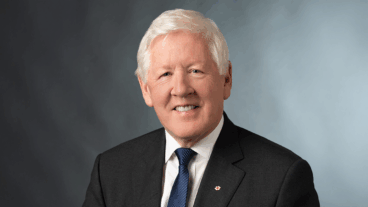
The Hon. Bob Rae
Canada’s 25th Ambassador to the United Nations
Remember the difference between impulse and consequence. Emotions run high in moments of pressure and crisis, so leaders need to engage their team: ask everyone to assess the situation and push for evidence before acting.
Separate what has to be decided now from what can be deferred, and identify who else needs to be consulted. Take as much time as you can to listen and assess, and maintain as much control as possible over your calendar and consultation process.
Throughout, consciously weigh the costs and implications of deciding now versus delaying. And finally, as a leader, always try to inject calm, perspective, and — where possible — a bit of humour into the conversation.
The Honourable Bob Rae brings over five decades of leadership at the highest levels of international diplomacy, national politics, and public policy. As Canada’s former Ambassador to the United Nations, Premier of Ontario, and interim Leader of the Liberal Party of Canada, he offers audiences rare insight into navigating complex global challenges, building consensus across divides, and leading through transformation.
Preparation Is a Discipline

General Wayne Eyre (Ret’d)
Former Chief of the Defence Staff | Leadership, Strategy, and Global Security Expert
With a confluence of global and national stressors leading to much uncertainty, strategic decision-making is more difficult, stressful, and fraught with risk. The only certainty is that hard choices are coming. Preparation will strengthen your judgement:
- Envision possible future scenarios, their implications, and your possible actions. They will invariably be wrong, but the exercise will orient you to a range of possibilities and responses.
- Refine and embrace your organization’s values and objectives. Under pressure they provide decision guardrails.
- Create a leadership climate that allows your team to challenge assumptions and provide differing perspectives. No one person has the monopoly on good ideas, and groupthink under pressure can be disastrous.
- Prepare yourself to make decisions with imperfect information. A good enough decision executed in time is better than a perfect decision made too late. Indecision is itself a decision.
- Practice thinking about your thinking. Pressure magnifies cognitive biases and emotions and degrades your decision quality. Furthermore, this self-awareness helps clarify your decision’s rationale — are you making it for the good of the organization or in self-interest. True character manifests under pressure and in the choices one makes.
General Wayne Eyre (Ret’d) is a distinguished Canadian military leader who served a highly eventful and consequential 40 years in the Canadian Armed Forces. Asked to serve as the Chief of the Defence Staff in a period of intense crises, he guided Canada’s military through an era he describes as a “turning point in history,” marked by unprecedented global and domestic challenges. He now speaks on the pressing issues facing Canada and the leadership required to navigate them.
Focus on the Next Right Decision, Not the Perfect One

Gitane De Silva
Expert on International Trade, Canada–US Relations, Energy Issues, and Geopolitics
From changing global alliances to trade wars, the rise of AI and wild weather events, it feels like change is constant, accelerating and happening on every front. When faced with so much uncertainty, it can be hard to make clear, strategic decisions. And yet we need to. The world isn’t going to stop until we feel ready.
So how can we make good decisions when so much feels unknown? Go back to the basics: what are your strategic priorities or the principles that underpin everything? You might not be able to get all the way to yes in one move, so make the next right decision that takes you closer to where you need to be. And remember that most mistakes are fixable, so if you have to take two steps forward and one step back, give yourself some grace. Strong leaders own their decisions and are open to course correction when new information comes to light.
Gitane De Silva is a recognized public policy leader with executive experience at provincial, national, and international levels. Over the course of her 25-year career, she worked extensively on Canada–US relations, energy and environment issues, intergovernmental relations, and complex negotiations. She draws on her wealth of experience to deliver actionable insights and strategic clarity on leadership, geopolitics, and the energy sector, grounded in real-world expertise.
Watch for Economic Hallucinations

Todd Hirsch
Navigator of Economic Disruption | Speaker | Author
There’s a lot of talk these days about AI agents making mistakes — hallucinations, we call them. But humans are actually still much more susceptible to hallucinations, especially around the economy. If we allow ourselves to fall victim to these “economic hallucinations,” good decisions are impossible.
An economic hallucination occurs when we absorb all the negative economic stories around us, and incorporate them into our specific, individual situations. Tariff madness. Wars raging. Towns on fire. Energy shocks. Inflation spikes. The bad news is cruel and relentless.
But do all of these events actually affect your business and your customers? They might. But if they don’t, you risk making a poor business decision. You might be hallucinating.
The best advice during times of uncertainty is to ensure you base decisions on your actual situation. Clear your mind, and the minds around your board table, of the negative news. Ask the hard question: does this really affect us? Or is it an economic hallucination?
Todd Hirsch is an internationally renowned economist, keynote speaker, and author whose research and work focuses on enhancing adaptability in an ever-changing world. Having had a front row seat to key issues transforming the global economy for the past 25 years, he delivers dynamic, clear-eyed talks on adaptability, creativity, and resilience to help industry and business leaders prepare for a future that is volatile, uncertain, complex, and ambiguous.
Hire a Keynote Speaker on Decision-Making and Leadership
We’re proud to represent an impressive roster of leadership experts with firsthand experience navigating high-stakes situations, from global crises and military command to economic upheaval and international diplomacy. They bring real-world insight on how to lead decisively when stakes are high and the path forward isn’t clear.
Whether you’re planning a conference, corporate event, or leadership offsite, we’ll help you find the right keynote speaker to inspire your audience and equip your team with practical strategies for navigating uncertainty.
Contact us today to book a speaker for your next event.