Disagreement has never felt riskier. In a polarized world, many people have learned that the safest move is to keep their views to themselves, but this lack of discussion leads to stagnancy — especially in the workplace where unspoken disagreement stalls good ideas and better decisions. The strongest teams don’t avoid friction. They learn how to work through it.
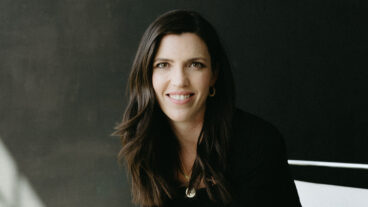
As the University of Toronto’s first-ever Advisor on Civil Discourse, Randy Boyagoda has spent years studying and advancing what it means to disagree well. He is a prolific novelist, CBC Radio national columnist, and professor of English at U of T, who, as a keynote speaker, explores why civil discourse — how we disagree, debate, and think out loud together — is the foundation to building trust, advancing knowledge, and strengthening teams, organizations, and communities.
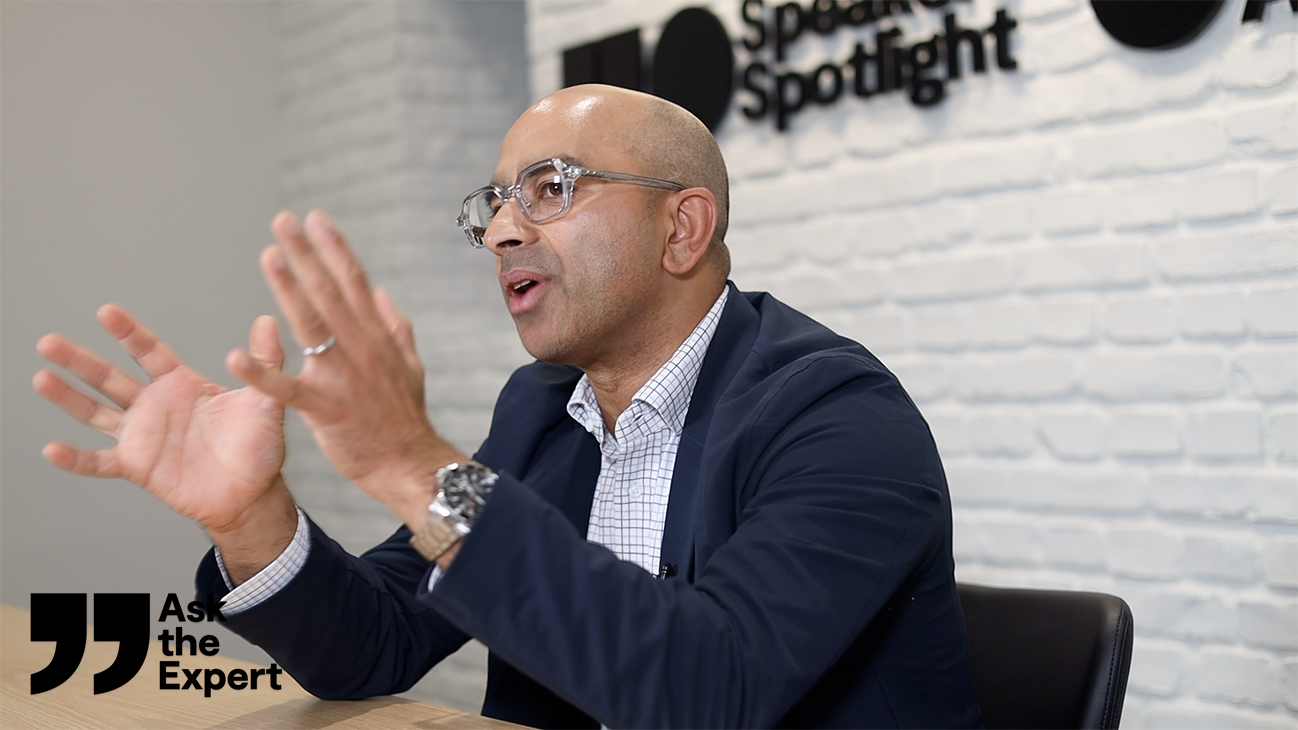
As part of our ongoing Ask the Expert series, where we put the questions keeping business leaders up at night to the people best positioned to answer them, we asked Randy — how do we get better at having difficult conversations? Here’s what he had to say.
Answers have been edited for length and clarity.
What Does It Mean to Disagree Well, and Why Has It Become So Hard?
Our goal with any conversation about an idea or an issue that matters should be to disagree well. To disagree well is to practice civil discourse not because it’s a good thing to do — to be polite to each other and open to ideas — but because disagreeing well means you’ve committed to thinking out loud with someone else. In order to do that, you need to trust the other person. You need to demonstrate that you are curious about them and what they think. You need to demonstrate that you are open to a conversation where you don’t already have a complete view.
We live in an era where, across our personal, professional, and shared public lives, disagreeing well has become difficult. Why? Because we live in what social scientists call a low-trust environment and trust is so important to disagreeing well. We’ve also moved from a curiosity-based society to a fear-based one. What do I mean by that? We’re scared — scared for you to find out what I think about something. Scared to find out what I actually think about something. But the only way to figure that out is to think out loud with someone.
If I’m not willing to do that, if I’m more comfortable being assured in advance that everyone I’m speaking and responding to is someone I already agree with, well, then I’m just captive to the algorithm. I’m captive to a technology-powered division in our lives that gives us assurance that we never have to see someone or something that we disagree with. That’s a terrible way to proceed in a diverse world.
Making Room for Dissent at Work
In a professional setting, from a giant corporation to a bootstrapping startup, friction is really important to advancing the mission and work of the organization. I worry sometimes that we have become a little too accustomed to frictionless living in order to avoid conflict. But if you’re trying to come up with a new idea or you are trying to figure out whether to prioritize one thing over another, especially if you’re a leader, you need to be able to trust that your team can argue it out. If the people who report to you can’t think out loud together, can’t practice civil discourse for fear that someone might take things personally, or are afraid to put their hand up with a dissenting view when they notice a consensus, that’s a great challenge to the work of the organization, no matter what it is.
Leaders need to create the conditions for team members, for employees, for people in all kinds of professional settings to feel like they can — and should — take risks when it comes to ideas that are not settled yet. That strikes me as a good thing to practice, both for the good of the organization and the good of the people.
Civil Discourse in Practice
I was asked to chair a working group made up of professors and students from across the very big University of Toronto. This was a very diverse group of people in terms of demographics, political leanings, lived experiences, etc. They did not agree on much, but they agreed at least to my opening proposal, which was, if the 15 of us can’t think out loud together once a month over lunch, how can we expect 100,000 people at a global research university in a massive metropolis to do the same?
So that’s an example where I had to keep a conversation going while there were divergent points. But what I was really encouraged by was my colleagues’ openness to assigning the best of intentions to each other despite differences and their willingness to keep talking even when there were strong disagreements between people. There was a recognition of the inherent dignity of each other.
When it comes to civil discourse what’s really important is to take people seriously. Whether it’s a client, customer, or member of your team, I don’t think people are satisfied anymore with any version of a phrase like “many thanks for your concerns”, “it’s been a difficult time for everyone”, “we know there’s a lot of struggle,” etc. It doesn’t feel like you’re taking the person seriously. Whereas, if you’re actually willing to disagree with someone on substantive terms in a thoughtful and generous way, I have found in my experience with civil discourse, people are much more satisfied to be disagreed with than to be pacified with kind of vague, therapeutic language.
Hire Randy Boyagoda to Speak at Your Event
The ability to engage across difference is one of the most important skills a team can have, and one of the hardest to build. In his keynotes, Randy Boyagoda shows leaders, teams and organizations how to engage across difference with curiosity, honesty and respect because the cost of getting it wrong (eroded trust, missed opportunities, stalled decisions) is too high to ignore.
Contact us to learn more about Randy and how to book him to speak at your next event.