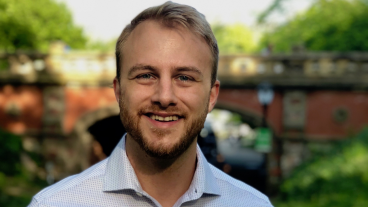
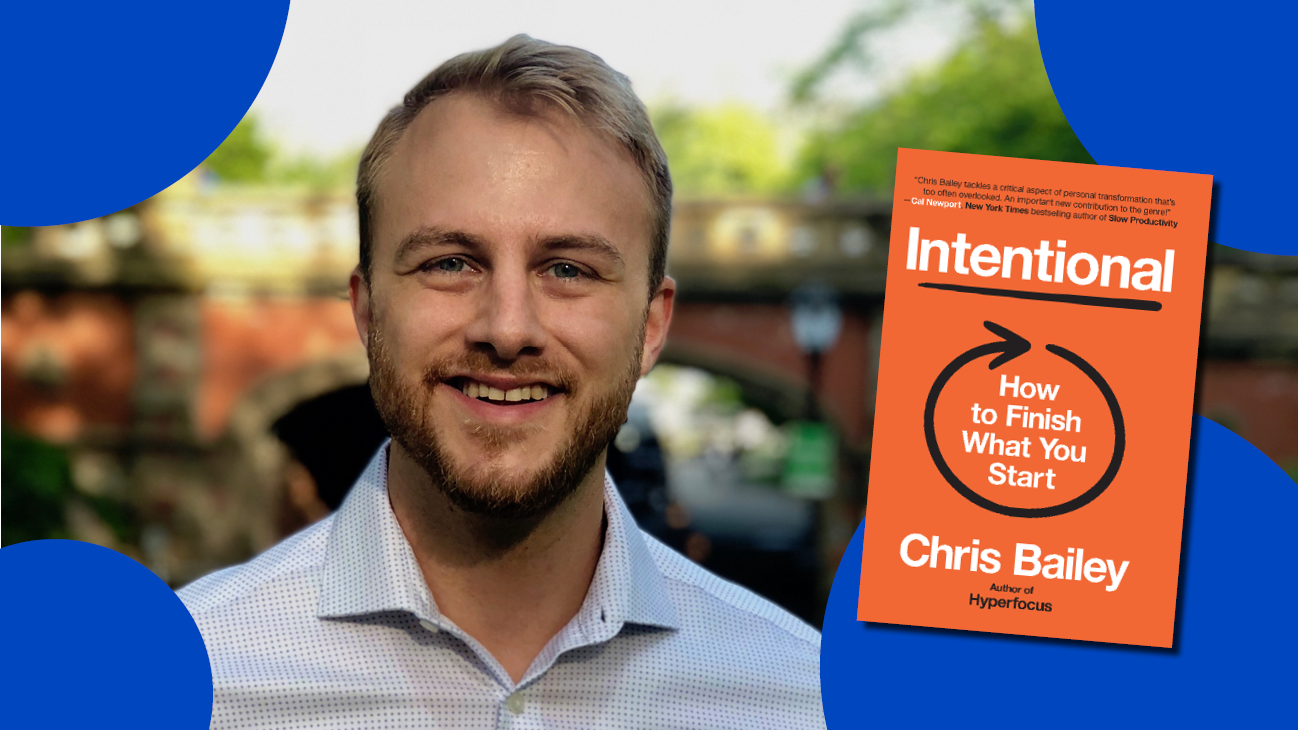
Setting goals is easy. Following through on them? A whole lot harder. In his new book Intentional: How to Finish What You Start, three-time bestselling author Chris Bailey distills a decade of deep research on productivity to deliver a profound, practical, and counterintuitive roadmap to getting things done.
It turns out, the secret to finishing what you start isn’t sheer willpower or the latest productivity hack. It’s intentionality. Forget extensive to-do lists and a never-ending workload. To reach your goals, you must structure your daily actions around what’s most important to you — and let go of the rest.
Integrating the science of desire, values, and procrastination with the wisdom of Buddhist monks, Chris lays out step-by-step strategies for intentional accomplishment, from structuring short-term goals to increase the likelihood of completion to making dull tasks more attractive and combatting procrastination. We recently sat down with him to talk about his new book and how through being intentional with our goals, we can unlock not just greater productivity but a deeper and more satisfying sense of accomplishment.
The Missing Piece in Productivity
Speakers Spotlight: You’re the bestselling author of three books exploring productivity and performance. Where did your interest in intentionality come from and what led you to realize that it was the missing piece to productivity?
Chris Bailey: I’m of the mind that productivity isn’t about doing more faster, it’s about doing the right thing deliberately and with intention. But intention has always felt like an elusive subject. We often have intentions and end up distracted or procrastinating, and don’t follow through on them.
So, this idea that being intentional is tied to productivity has been in the back of my mind for years, but I wasn’t able to bring it to fruition until I found research about values of all subjects.
Values are a subject that can sometimes feel fluffy, but if you look at the science of what we value, you quickly realize that embracing the things we value on a deep and foundational level, that using the science of values, is the key to finishing what we start and following through on the things we set.
Where Ancient Wisdom Meets Modern Science
SpSp: In your book, you blend scientific research with lessons from Buddhist monks. How did these two worlds come together to shape your approach to intentional accomplishment?
CB: This was quite a surprising thing I came across while researching for my book. I spoke to many researchers and scientists about where intention comes from, because it comes from a host of places — it’s biological, it comes from our want for pleasure, our desire to avoid pain, lessons learned that we want to implement, our self-reflective capacity, etc.
Today though, we often live in autopilot mode, which is the least productive mode for us to be in. So, while I was going deep into the research, I also chatted with Buddhist monks, I’m Buddhist myself, and their answers would map perfectly on top of the science and provide a structure for thinking about the science.
Monks and scientists both study intentionality but approach the same ideas from different directions. One observes the mind and the other’s trying to observe how other people’s minds work. In the book, I integrate a lot of stories from monks alongside the science of this topic. It’s both fascinating and informative.
Bridging the Gap Between Intention and Action
SpSp: From your research, what is the biggest reason people don’t follow through on their goals? And how does your book help them bridge that gap between intention and action?
CB: There are two main things holding people back: not accommodating what we value and not thinking about the different layers of intentionality. These are the two main things I zero in on in my book and in my keynote.
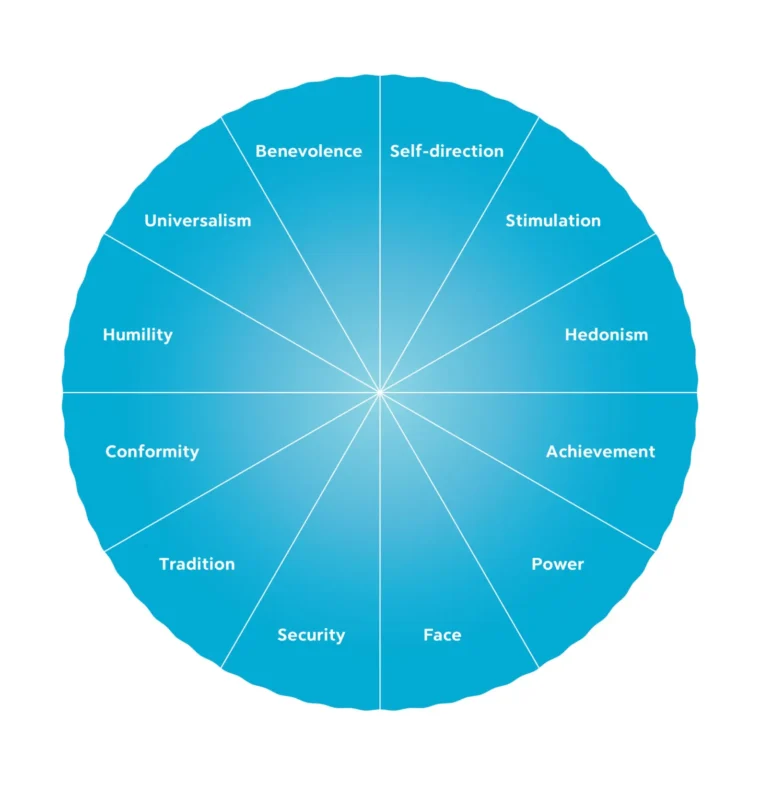
On a human level, we value 12 things in different amounts. These values stem from broader priorities and life itself. If we’re able to accommodate what we value on a deep human level, our actions become predictable because we’re able to accommodate who we are on a fundamental human level.
With goal setting, changing the way we approach a goal can lead us to follow through on it differently. For example, writing an employee handbook could be seen as a dull task. But perhaps you value benevolence, helping others, and self-direction. Both of these values can be applied to this task by reframing the ask — how can I better help others through this handbook? This changes how you approach it.
Once we can identify what our largest values are, we’re able to harness what actually motivates us on a personal, fundamental level. In the book, I walk people through determining what their top values are, so when they set goals, they can map them on top of what they value. Then, I apply this through The Intention Stack. Across our lives, there are layers of intentionality — our values, priorities, goals, and plans. So not only does the book help you discern your foundational values, it also helps you accommodate the different levels of intentionality in both your life and work, and what they look line on a day-to-day basis. Ideally our goals need to be aligned with our values and daily actions.
Knowing When to Let Go
SpSp: While this book focuses on helping people reach their goals, you also explore when a goal might not be right for them. When do you know it’s time to walk away?
CB: When we set a goal and repeatedly fail at it, our response to that failure is to keep setting the same goal. If the idea is to be making consistent progress towards doing the work that we want and living the life that we want, we need to be constantly editing and reiterating goals towards not only who we are but who we want to be.
The most underrated piece of advice for goal setting is to drop more of our goals more often. This is not an admission of failure as much as it is an opportunity to try other goals on for size. Most goals benefit from an edit. You want to lose 10lbs for beach season? That goal is built around the value of face. If you don’t value face, you are not going to be that motivated by it. However, if you value self direction, set a goal to experiment with five different ways of eating to find the one that’s delicious and sustainable for you. You might end up doing the same thing, but what changes is your relationship with the goal.
So, if you’re not making the progress you want, look at the goal and try to change it so it’s aligned with your values. If you can’t do that then that’s a good sign it’s time to drop the goal. I call these sepia-toned goals where the day-to-day reality of that goal doesn’t match what we have in mind.
For instance, I love the idea of being an early riser, but every time I try to do this, I hate the ritual. I have to go to bed early, but I have more energy in the evening. So, the goal of being an early riser compromises my sleep reality. The day-to-day reality doesn’t match with the idea in my head. Being aware of this is critical to becoming more intentional. If things aren’t lining up, it’s a sign that you are working on a sepia-toned goal and it has to be dropped or heavily edited.
Start Living Intentionally Today
SpSp: If someone wants to start living more intentionally today, what’s the simplest first step you recommend?
CB: Look at the timeline of what you want to be more intentional about. Then fast forward — what do you want to accomplish by the end of it? What difference do you want to see? That’s all you have to do. Consider the timeline and what actions you want to take to make it happen.
Hire Chris Bailey to Speak at Your Event
Over the past decade, Chris Bailey has personally experimented with pretty much every productivity hack under the sun to separate what works from what doesn’t. He is one of the most-viewed TED speakers of all time and has been called “the most productive man you’d ever hope to meet” by TED Talks, “a quirky and energetic guide through the productivity thicket” by Harvard Business Review, and a “productivity mastermind” by WIRED.
Chris’ practical time-saving advice combined with his infectious enthusiasm for the topic, will transform how audiences view productivity at home and work with his new keynote “Intentional: Rethinking Productivity and Performance” drawing from his acclaimed new book, Intentional.
Contact us to learn more about Chris and how he can help your organization be more productive in a world of distraction.