AI and other new and emerging technologies are reshaping business, society, and daily life at an unprecedented pace. In 2026, leaders face critical questions about trust, governance, and staying relevant in an increasingly intelligent world.
To help you navigate what’s ahead, we asked five of our top AI and tech keynote speakers what tech trends they’re watching in 2026, and how we can best prepare ourselves for the changes ahead. Their insights reveal both the transformative potential and urgent challenges of this moment — offering practical strategies to harness AI’s power while maintaining human advantage.
This is part three of a three-part series sharing “trends to watch” in 2026. Exploring three key areas — global political and economic shifts, the workplace, and AI/tech — we’ve compiled tips, trends, and advice from some of our leading speakers to help prepare you for the challenges and opportunities ahead.
The End of Digital Trust

Shawn Kanungo
Strategy in a World of Disruption
Remember when we used to say, “pics or it didn’t happen.” Now? Pics mean nothing.
Advances in generative AI have ushered in an era where it is nearly impossible to tell apart real content from artificial creations. Cutting-edge image generators like Google’s new Nano Banana Pro and Midjourney can produce visuals with studio-quality detail and realism.
AI can replicate ANYTHING. Photos, videos, voices — all of it. Even the people who built these tools can’t tell what’s real anymore.
So, here’s what’s happening: The more perfect digital gets, the more we crave imperfect and real. You can’t deepfake a handshake. You can’t algorithmically generate the electricity of a room full of people who showed up.
So ironically, the collapse of digital trust is sparking a renewed hunger for real experiences and verifiable truth. In a world of perfect forgeries, authenticity becomes a precious commodity.
Ultimately, the erosion of digital trust is forcing society to recalibrate how we consume information. We are relearning to value the tangible and the truthful over the viral and the virtual. And unfortunately, we are entering a world where we have to first ask: “Is that real?”
Shawn Kanungo is one of the world’s most sought-after voices on innovation and generative AI. He spent 12 years at Deloitte helping leaders better plan for the opportunities associated with disruptive innovation. His high energy keynotes provide audiences with an optimistic roadmap for the future; one that embraces unexpected approaches to innovation to remain competitive and relevant.
The Rise of Spatial Intelligence

Dr. Helen Papagiannis
World-Leading Expert on AI and the Future of Human Experience | Author of Augmented Human
In 2026, the technology shift I’m watching is the rise of spatial intelligence and AI wearables. AI is moving off screens and into the world through glasses, sensors, and humanoid robots. Spatial intelligence understands the world itself, including movement and context, rather than operating only through language or text.
For leaders, this is not a technology problem. It is a decision confidence problem. As AI mediates what people see and respond to, teams hesitate and action slows. This pattern is already visible in today’s decision fatigue. People are unsure what is stable or authentic. Trust is fracturing at the level of experience, not data.
As AI becomes an invisible layer of daily life, leaders need to focus on how these systems shape trust, attention, and confidence to act. The next advantage will come from designing environments that help people feel grounded, oriented, and able to move with clarity inside increasingly intelligent worlds.
Dr. Helen Papagiannis is a globally recognized thought leader in immersive technologies, specializing in AI, spatial computing, and frontier technologies and their transformative impact on industries. With two decades of pioneering experience, she explores how these cutting-edge innovations expand human intelligence and enhance human possibility.
The Politicization of AI
Taylor Owen
Expert on Our Digital Future | Host, Machines Like Us
After several years of hype and acceleration, AI is entering a more contested and consequential phase. The defining question for 2026 will no longer be what the technology can do, but whether institutions can adopt it in ways that remain politically legitimate, socially trusted, and economically durable.
Governments that embraced rapid AI adoption are now discovering that potential for productivity gains and new economic growth come with real political exposure, particularly around jobs, inequality, safety and concentration of power. As a result, AI is becoming a live political issue rather than a technocratic one, creating new openings for political movements that seek to hedge against rapid technological change. At the same time, governments are likely to re-engage on AI governance, driven by geopolitical competition, public mistrust, and growing concern about safety, especially for children.
Meanwhile, AI’s capabilities will continue to improve dramatically, even as its endemic limitations persist, forcing organizations to learn how to rely on systems that are both powerful and imperfect. The result is a paradox in which AI becomes both indispensable and remains untrustworthy. The year ahead will be defined by how effectively leaders navigate that balance and whether they can capture the benefits of AI while maintaining trust, accountability, and legitimacy. Read more.
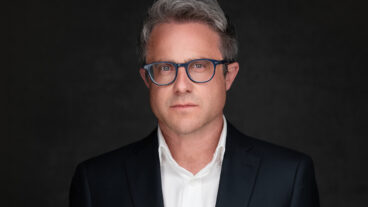
Taylor Owen is one of the world’s leading experts on how artificial intelligence and digital platforms are reshaping democracy, information, and society. His far-reaching, thought-provoking keynotes draw on his work with global AI developers, entrepreneurs, and policymakers, as well as his hands-on experience shaping national regulation, to explore what the AI revolution means for your organization and society at large.
A Greater Need for AI Literacy

Amber Mac
Technology and Innovation Speaker | President, AmberMac Media, Inc.
The new AI power shift is underway. If we empower more people to be part of this transformative change — instead of leaving it in the hands of a select few — we can build a better world. In other words, in today’s predictable unpredictability, we need a widely accessible framework for our fast future.
Here is my framework for 2026 — The New AI Power Shift: Risks, Rewards, and Readiness.
- Risks: It pays to understand how to mitigate AI dangers. This goes beyond leaders, we all need to better understand the long list of AI risks we face now and into the future, such as media manipulation, job displacement, and environmental harms.
- Rewards: Despite a long list of risks, AI also offers many rewards. In fact, I’m optimistic about AI’s potential to increase productivity, empower businesses, and transform healthcare, among other things. If we can mitigate some of the risks mentioned above, this technology can supercharge industries, catalyze entrepreneurs, and even save lives.
- Readiness: There’s no slowing down the AI train, but we do need guardrails and governance to provide certainty along the innovation journey. I’m often asked, what can organizations, individuals, and the next generation do right now to stay competitive in this AI world? My advice includes these three priorities: human purpose, AI literacy, and leadership accountability.
In 2026, we need to focus on upskilling our workers, empowering our children, and supporting our businesses to design, adopt, and commercialize AI in a responsible and trustworthy way. Read more.
Considered by many to be the go-to expert on anything to do with technology, Amber Mac helps companies and audiences stay ahead of the curve. She is an industry veteran, renowned as a journalist, moderator, entrepreneur, podcaster, and author. Whatever the setting, Mac offers clarity and a passion for digital innovation in all forms.
A Cognitive Revolution

Mitch Joel
Future Strategy, AI Transformation, and Modern Marketing Expert
The loudest story in tech is still AI, but the quietest one is far more disruptive. In 2026, the real transformation won’t be digital — it will be cognitive. We’re entering a world where the limits of an organization are no longer its technology stack, but the imagination and elasticity of the people leading it and the people working for it.
AI is forcing a confrontation with our own thinking. Our biases. Our defaults. Our speed. Our capacity to interpret complexity without collapsing into old habits that feel safe but no longer serve us.
The leaders who struggle next year won’t be the ones who fall behind on tools. They’ll be the ones who cling to mental models built for a yesterday world.
The advantage now belongs to the people willing to rethink how they perceive reality itself because in 2026, the organizations that learn to think differently will be the ones that redefine what “possible” even means.
Welcome to the cognitive industrial revolution.
Having been on the frontlines of media, culture, and technology for more than 30 years, Mitch Joel helps organizations innovate, stay relevant, and rethink the future in ways that are meaningful, not theoretical. his engaging, entertaining, thought-provoking, and customized keynotes leave audiences with practical insights they can use immediately.
Hire an AI and Tech Expert to Speak at Your Next Event
The AI and technology trends shaping 2026 demand strategic foresight, proactive leadership, and a deep understanding of both the risks and rewards ahead. Our AI and tech keynote speakers bring the expertise and actionable insights your organization needs to navigate digital transformation, build trust in an age of uncertainty, and maintain human advantage in an increasingly intelligent world.
Contact us to learn more and to book a keynote speaker for your 2026 event.