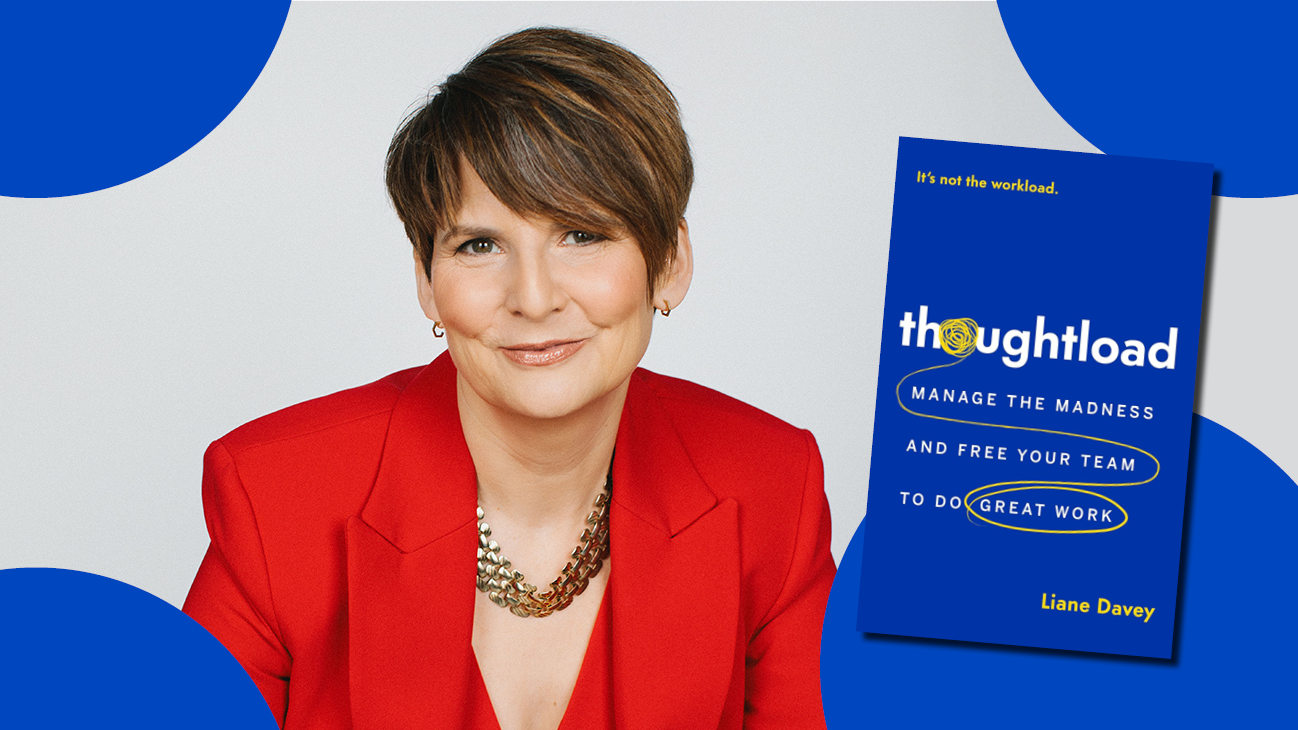
In Thoughtload, New York Times bestselling author and team effectiveness advisor Liane Davey tackles today’s most pressing management challenges: over-burdened systems, burned-out teams, and declining results. However, contrary to what many may think, the root of the problem is not from out-sized workloads — it’s from excessive thoughtload.
Thoughtload is the cumulative and often overwhelming burden of increasing cognitive and emotional demands, worsened by decreasing physical and mental energy. In this brilliant, highly prescriptive guide, Liane lays out the steps for reducing thoughtload, so that you and your team feel more focused — and get more done.
Workload Versus Thoughtload
Speakers Spotlight: In Thoughtload, you challenge the idea that burnout is driven by workload. What helped you realize that “thoughtload” is the deeper issue?
Liane Davey: As I watched my clients and listened to people talking about stress and burnout, I realized how much of their time and energy was going to activities that weren’t part of their work. I noticed how much was going into activities that weren’t producing important outputs or achieving desired outcomes. Instead, the lion share of their time and energy was going to attending low-value meetings, trying to be responsive to endless emails and Slack threads, and dealing with drama and unproductive team dynamics.
I also noticed that many of the things derailing people from getting work done are intrusions from home. Anxious kids texting in the middle of the day, aging parents requiring care, stress of managing a household.
When you add it all up, most people I talk to say they’d be thrilled to just do the work — if only they could get to it amidst all the other demands.
Recognizing the Signs
SpSp: For managers who may not recognize it right away, what are the clearest signs that thoughtload — not workload — is the real problem on their team?
LD: When workload is high and thoughtload is manageable, you’ll notice a more frenetic pace, but it will be focused and locked in on getting things done. People lean in. In contrast, when thoughtload is high, people are more likely to lean back.
You can spot it in a few different ways. First, people lose the capacity for novel thinking and start defaulting to old playbooks, which is dangerous when the world is changing so quickly. Another clear sign of high thoughtload is when they start being less present; they drift off or multitask because their attention is drawn elsewhere. You’ll also notice a change in the person’s emotional state. Some people will become more impatient, intolerant, or aggressive whereas others will become deflated, demoralized, or discouraged. Finally, you’ll see obvious signs in their body language that the person’s energy is depleted and the tank is on empty. People can handle a remarkably high workload, but a high thoughtload will do them in.
The Cognitive and Emotional Dimensions
SpSp: You describe thoughtload as both cognitive and emotional. How do those show up in day-to-day work, and why is it critical for leaders to address both?
LD: When I start talking about thoughtload, many people paraphrase and start referring to cognitive load. I think it’s because the cognitive and intellectual side of thoughtload seems safer and more appropriate for the workplace. But thoughtload is just as much about the emotional burdens you’re carrying. Given the way our brains are wired, if you’re having an emotional reaction or carrying emotional residue from something that happened earlier in the week, that will supersede the cognitive demands. For example, if you’re afraid that your proposal is going to be shot down by a colleague, the risk of being embarrassed is more likely to drive your actions than your responsibility to share divergent thinking.
We’re living in an emotionally dysregulated world, but we don’t have the tools to express or process our emotional experiences. I’m worried we’ve become an emotionally illiterate society. The result is that we don’t have the skills to extract the useful data from emotions and instead get mired in the counterproductive drama. Managing thoughtload means learning to process emotions (yours and everyone else’s) more efficiently.
One Change Leaders Can Make Now
SpSp: What’s one practical change leaders can make immediately to reduce thoughtload and create more focus without adding more complexity?
LD: There are so many simple, practical things managers can do to reduce thoughtload, but if I had to pick one, I would say shrink teams. Cross-functional and matrix structures are contributing unbearable thoughtload. We used to work in small teams where we had a clear outcome to accomplish, and we knew and trusted the people we had to work with. Now, we’re going to 15 meetings a week, trying to keep up with issues from across diverse functions, and interacting with people we don’t know and don’t trust. A huge amount of our energy goes into assessing whether we’re psychologically safe to open our mouths.
Managers can do so much good by being more ruthless in prioritizing, by assigning small groups to work on things rather than doing everything with the full team. You’ll have to deal with the FOMO and the people who want to be included in everything, but the benefit in lowering people’s thoughtload will be well worth it.
Designing for the Future
SpSp: Looking ahead, as work becomes more fast-paced and knowledge-driven, how can organizations proactively design environments that prevent thoughtload from building in the first place?
LD: Managing thoughtload requires an ongoing investment in managing the madness. The first madness you need to counteract is the false sense of urgency and the attempt to do everything, everywhere, all at once. Instead, we need to focus time, energy, and attention on the most essential activities that will drive the outcomes you’re looking for.
The second madness is pretending business isn’t personal. We need to make space for emotions that are already in the workplace and process them as they arise (rather than ignoring or invalidating them and driving them underground).
Finally, we have to stop sprinting the marathon. We need to treat energy as a resource that you continually need to renew. We need to embrace the fact that resting, reflecting, and renewing aren’t indulgences that detract from performance, they’re essential components of achieving it.
Book Liane Davey to Speak at Your Next Event
Known as the “teamwork doctor,” Liane Davey has worked with businesses, including Fortune 500s, across the globe, helping to transform teams from the frontlines to the boardroom into high performing units.
In her new keynote, “Invisible Overload: How Thoughtload is Undermining Performance and What Leaders Can Do About It”, Liane introduces a radical reframe of what’s really driving burnout and disengagement. Drawing from her new book, she unpacks the three forces that make up the modern thoughtload — attention overload, emotional reactivity, and energy depletion — and offers practical tools to lighten the lift.
Contact us to learn more about Liane and how to book for your next event.