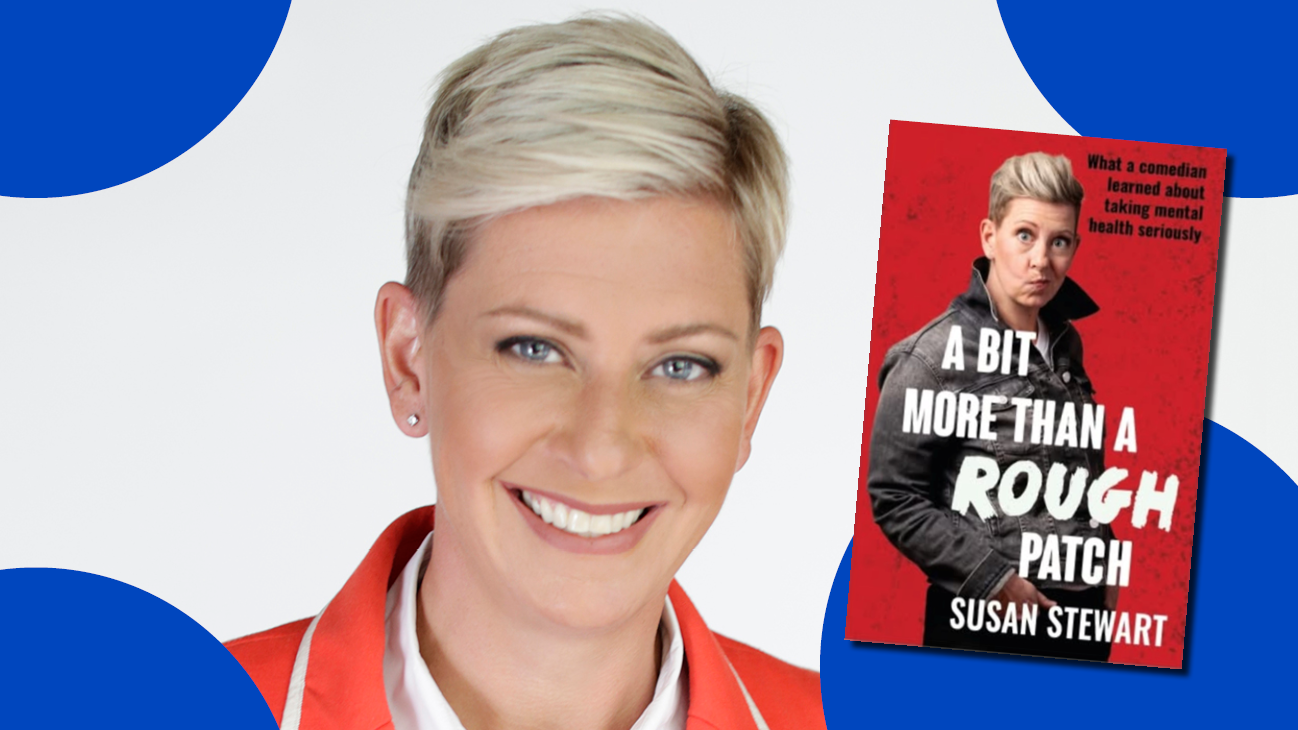
Susan Stewart thought she knew a thing or two about resilience. She had survived depression before, built a career helping people see the lighter side of life as a comedian and motivational speaker, and spent years believing she had beaten it. Then 2023 happened.
When depression (and severe anxiety) came roaring back, Susan was convinced she could handle it. She exercised, meditated, read the books — she self-helped the hell out of herself. But as things got worse, she resisted the very help she would have encouraged anyone else to get. What Susan dismissed as a “rough patch” eventually became a mental health crisis that culminated in a suicide attempt which forced her to confront the shame, stigma, and destructive thought patterns she could no longer outrun.
Based on her hit comedy show, A Bit More Than a Rough Patch is Susan’s sometimes hilarious, sometimes heartbreaking, always true account of losing hope and finding it again. With the wit of a comedian and the perspective of someone who has been to the darkest edge and returned, Susan reminds us that taking mental health seriously doesn’t mean we have to stop laughing.
We recently sat down with Susan to learn more about her new book and the lessons she learned along the way.
Ignoring the Warning Signs
Speakers Spotlight: You’ve gone through “rough patches” before and built a career on sharing your mental health journey and helping others build resilience. How did that shape or complicate your ability to recognize and handle this latest experience with severe depression and anxiety?
Susan Stewart: My past experiences with mental illness, and career as a motivational speaker who focused on “helping people see the lighter side of life”, ironically prevented me from getting the help I needed when I got sick in 2023. I refused to believe that I was sick AGAIN. How, with all the skills and knowledge I have now, could this be happening to me again? I thought I had beat it. I viewed myself as some kind of mental illness “survivor”, never to need medication again. In addition to my denial, I was a bit delusional. Even though my symptoms of depression and anxiety were severe, I thought, given my line of work and love of all things self-help, I could handle it on my own. And then there was my stigma. I was not going to be the author/speaker/comedian on medication. That would make me a fraud. This trifecta — denial, delusion, and stigma — led me to a crisis point of feeling hopeless and attempting to take my own life.
The Limits of Self-Help
SpSp: You write about self-helping “the hell out of” yourself. Reflecting on that, is there a point where self-help stops being useful and starts being a way of avoiding outside help?
SS: When I got sick in 2023, my depression and anxiety were at very high levels so all the exercise, positivity, and spirituality wasn’t enough to get me feeling and acting like myself. Those things can (and likely should) be part of the solution, but for me at that point, what was missing from the equation, was medication.
I’m going to answer the rest of this question based on neuroscience. Not something a comedian says often, but here we are. When it comes to things like depression and anxiety, we’re told to get outside, go for a walk, and practice gratitude, but sometimes mental health issues are bigger and more complex than that. In our brains, we have neurotransmitters which are good-feeling chemicals that affect our mood, behaviour, and cognition. When our neurotransmitters aren’t functioning like they should, that can lead to the symptoms of depression and anxiety.
When your brain’s “electrical system” is malfunctioning, medication that helps re-activate those neurotransmitters may be a needed element in your recovery. Yes, self-help can help, but what you may need in partnership with all those healthy habits is medication.
The Road to Recovery
SpSp: Can you take us inside seeking outside help — you mention “therapy camp”, psychiatric care, and more. What was the impact of these experiences in helping you find your way back to yourself again?
SS: Being medicated (properly!) laid the foundation for my recovery. In my opinion, when someone is dealing with a clinical depression and/or extreme anxiety that is making it hard to function, the first step is to treat it with psychiatric care. Based on my experience, it’s a rather big stretch to ask someone to engage in the therapeutic process, or meditate, or do yoga when they are struggling to get out of bed and put one foot in front of the other. It’s amazing what happens when you feel more like yourself — that’s when self-help can truly help.
“Therapy camp” was my nine-week stay at the Homewood Health Centre in Guelph, Ontario, where I completed a program focused on healing Complex Post Traumatic Stress Disorder. I had a therapist who specialized in Cognitive Processing Therapy, which is similar to Cognitive Behavioural Therapy, a psychiatrist, and attended classes that taught the tenets of DBT (Dialectical Behavioural Therapy), which includes mindfulness, distress tolerance, interpersonal effectiveness, and emotional regulation.
While the education and support I received was great, most of my healing at Homewood happened thanks to the wonderful people who were there receiving treatment with me. Being around 11 other people who shared the same struggles was extremely validating and comforting. I felt incredibly seen and heard. We were like a family and we laughed a lot. I have to say, the laughter and sense of community that I experienced was powerful for me. I actually went through quite a tough grieving period after leaving Homewood that was similar to those feelings you have when you get home from camp, hence, “Therapy Camp.”
Finding the Funny
SpSp: You turned one of the darkest experiences of your life into a comedy show and now a book. What did putting it onstage allow you to say or explore that you might not have been able to otherwise?
SS: Writing the show and book simply led me to finding the funny about a really hard time in my life. It was incredibly healing to see the humour in it all and help people see the lighter side of their struggles. The show and book have also given a very tough time in my life great meaning. It’s been a powerful kind of alchemy to turn a very tough experience into things that are now helping other people.
Hope on the Other Side
SpSp: If someone reading this is hitting their own rough patch, what’s the one thing you’d want them to take away from your story?
SS: The hard times in our lives are not forever. Brighter days are ahead. Trust me, they are. Many beautiful things have happened in my life since 2023.
Hire Susan Stewart to Speak at Your Event
Susan Stewart has spent nearly two decades helping audiences find humour in life’s hardest moments, drawing on her own journey through clinical depression and anxiety. She blends stand-up comedy with practical insight to deliver powerful messages about stress management, resilience, and mental health.
Contact us to learn more about Susan and the impact she can make at your next event.