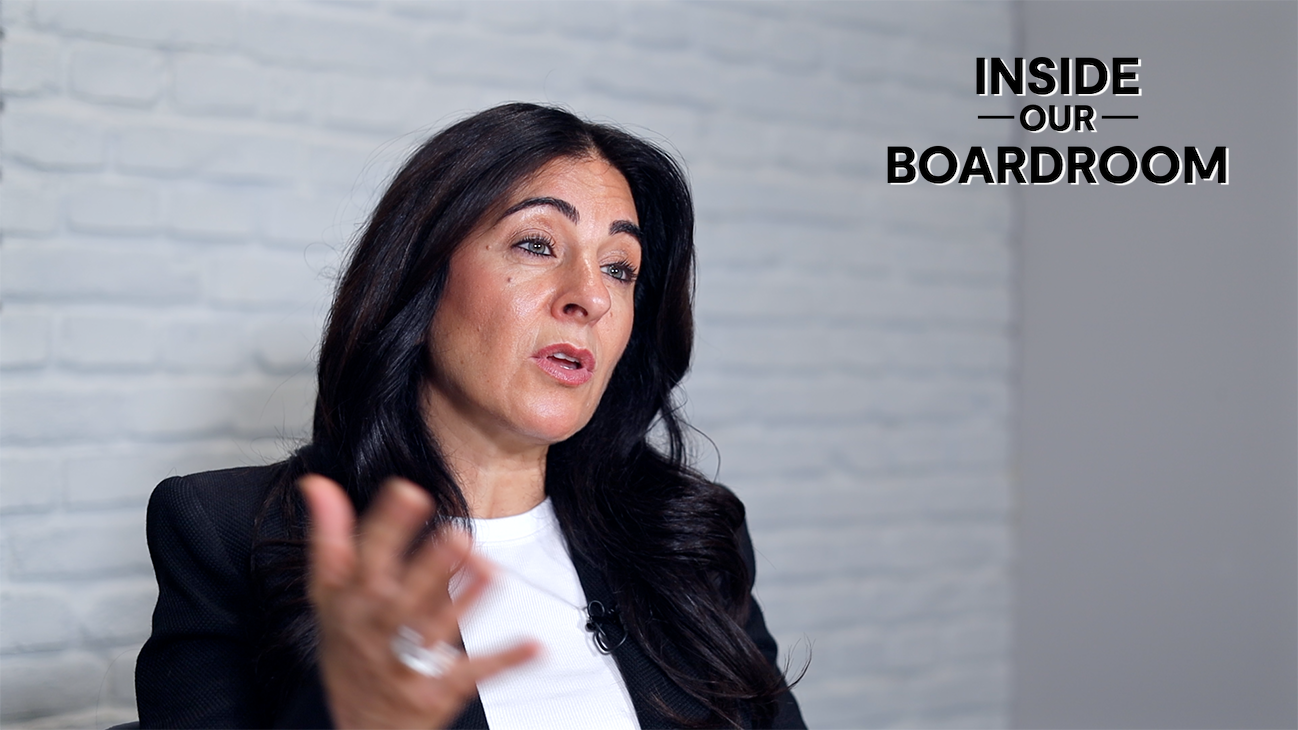
From a telemarketing role at Bell Canada to the executive boardrooms of some of the world’s most powerful technology companies, Rola Dagher has spent over two decades proving that adversity, when met with courage, is a catalyst for impact.
As the former President and CEO of Cisco Canada and Global Channel Chief at Dell Technologies — where she oversaw a $50B business — Rola has built world-class teams and driven transformational results at the highest levels of the industry. Her journey, from a childhood in war-torn Lebanon to the top of the global tech sector, is a masterclass in resilience, reinvention, and leading with purpose. She has since been appointed to the Order of Canada, awarded four honorary doctorates, and recognized among the world’s most influential channel leaders and advocates for inclusion.
Today, Rola is on a mission to help leaders rewire for what’s next, equipping executives with the clarity, courage, and strategies they need to lead in the AI era. She recently joined us “Inside Our Boardroom” to share her philosophy on servant leadership, how to reframe self-doubt into fuel, the power of empowerment to fuel organizational excellence, and more.
Answers have been edited for length and clarity.
Servant Leadership
Speakers Spotlight: You’ve held senior leadership roles at Bell, Dell Technologies, and Cisco Canada, what practical advice would you offer to a C-suite audience?
Rola Dagher: To practice servant leadership. People don’t want to work for a title, they want to work for people. You may join an organization because of the brand, but you leave it because of people and mostly because of leaders.
More than ever today, servant leadership is important because you need to serve your people. It’s not about you serving the people above you. It’s about you serving the people you lead in order to see that return on investment and return on impact.
My second biggest advice to leaders would be learn it, earn it, and return it. What does that mean? You should never stop learning in life. That know-it-all mentality doesn’t get you far. The learn-it-all mentality does and it brings a lot of good people along the way. With earn it, nothing is given. Earn is something that you work really hard at it to feel trusted by others around you. And once you get to the earn it part then for me as a leader it’s all about returning it. It’s all about giving back. I like to use the analogy of the elevator. The elevator goes up and once you get to the top, bring the elevator down and lift others with you. And for me, shame on us as leaders if we don’t bring the elevator down and lift up others.
Today, more than ever, the world needs leaders to inspire, empower, and get out of the way for the next generation. To impact and make a difference.
The ROI of Empowerment
SpSp: You talk about empowering leadership at every level. What role does empowerment in retaining and developing talent?
RD: Empowerment is extremely important. You hire great people, you bring them to your organization. If you limit them, you’re not going to get the return. But if you take the time to invest in them and inspire them and give them that empowerment, the return is 10x.
So for me, it starts from the top where leaders lead by example of giving the opportunity to people to go out there and do what they can do, what they were brought to the organization to do. And you’ll see that the organization thrives, the people and the culture. This starts with leadership cultivating that empowerment culture, giving people the inspiration that we win together and we lose together. So to me, the number one recipe for success is when leaders give individual contributors the full empowerment to make a difference.
Rethinking DEI
SpSp: How can organizations avoid backsliding on inclusion and diversity efforts?
RD: Yeah. So, DEI is a great question and I’ll tell you why. I experienced it the past year obviously with everything that’s going on in the world. I think if I my opinion if I rephrase DEI to you know diversity excellence and intelligence and for me I’ve always hired based on ensuring I don’t want to hire people that speak like me come from the same background and do the same thing as me. I want to hire people that are completely different than me because as a leader I need people to challenge me.
I need people to question things that I would do to help me be a better leader. So that diverse thought uh leadership in the room is extremely important. Excellence is based on their excellent background and project in careers and skills and what they bring in incentive. How do they actually what value do they bring to the organization and how can the organization see that huge incentive and value that they bring to the organization? I think that is extremely important and I’ve always said even before DEI was a big thing don’t hire to check a box. Don’t hire for a title. don’t hire for anything other than the right person at the right time for the right reason for the organization and that to me is a must. Um and how do we rethink DEI is ensuring that again we have the right people for the right role at the at the same time as ensuring that it’s not just a box you check it’s actually putting the right people in the organization to help the organization advance and take it to the next level.
Championing Women in the Workplace
SpSp: What more can we still do around empowering women in the workplace?
RD: Especially after COVID, we’ve seen a lot of women exiting the workplace, a lot of women rethinking, rewiring. When people ask me questions about how do you reinvent yourself, I always say that you own your own story, you own the pen to the story, and you own the rights to edit your chapters of your story every day. For every woman out there that is doubting herself in terms of what’s next for her, don’t be afraid of rewiring and rethinking of is that is the right opportunity for you.
As women in the workplace, we’ve done a good job, but we still have a long way to go. Women need to support other women, which means making a bigger effort to mentor and take more chances on other women because there is very limited opportunities and jobs for women in the c-suite, especially in the midlevel. And it’s not just about women. It’s about how we, men and women, work together to create these opportunities, because we are better together. And together we stop at nothing.
Turning Self-Doubt into a Superpower
SpSp: Throughout your journey, how did you tackle self-doubt?
RD: With everything I have done in my life personally or professionally, doubt has always been at the centre. It’s in our DNA. I think it’s actually good to doubt yourself because it grounds you. You miss 100% of the shots you don’t take, so go for it. Take every shot because you never know when you’re going to score big. Doubt for me has been the biggest learning because it challenged me to get outside of my comfort zone. Comfort and growth don’t co-exist.
I always say I get the three-year itch when I’m feeling too comfortable. It’s time to challenge myself. Of course I doubt my decisions sometimes and I make impulse decisions but they’re calculated decisions. That’s the most important part, the fact that when you actually know the facts, when you calculate those decisions, it’s okay to doubt yourself, but go for it and be uncomfortable because that’s when you grow.
Bring Rola Dagher to Your Next Event
Whether your organization is navigating change, building future-ready leadership, or accelerating its transformation into an AI-driven culture, Rola Dagher delivers the clarity, courage, and actionable strategies your team needs to move from survival to significance.
Contact us to learn more about Rola and how to book her for your next event.