
We are living through one of the most complex geopolitical and economic environments in recent memory. The Middle East is at war. Energy markets are in shock. Trade relationships are being redrawn and political fault lines — here in Canada and around the world — are widening. The scale and speed of what is unfolding is unprecedented, often leaving more questions than answers.
To help, we brought together some of Canada’s foremost economic and geopolitical experts — people who have spent decades advising governments, shaping policy, and navigating global crises — and asked them three questions: what short-term signals demand your attention right now, what longer-term shifts will define the years ahead, and how can leaders stay steady amid all the volatility. Here’s what they said.
The Strait of Hormuz Will Set the Tone for What Comes Next
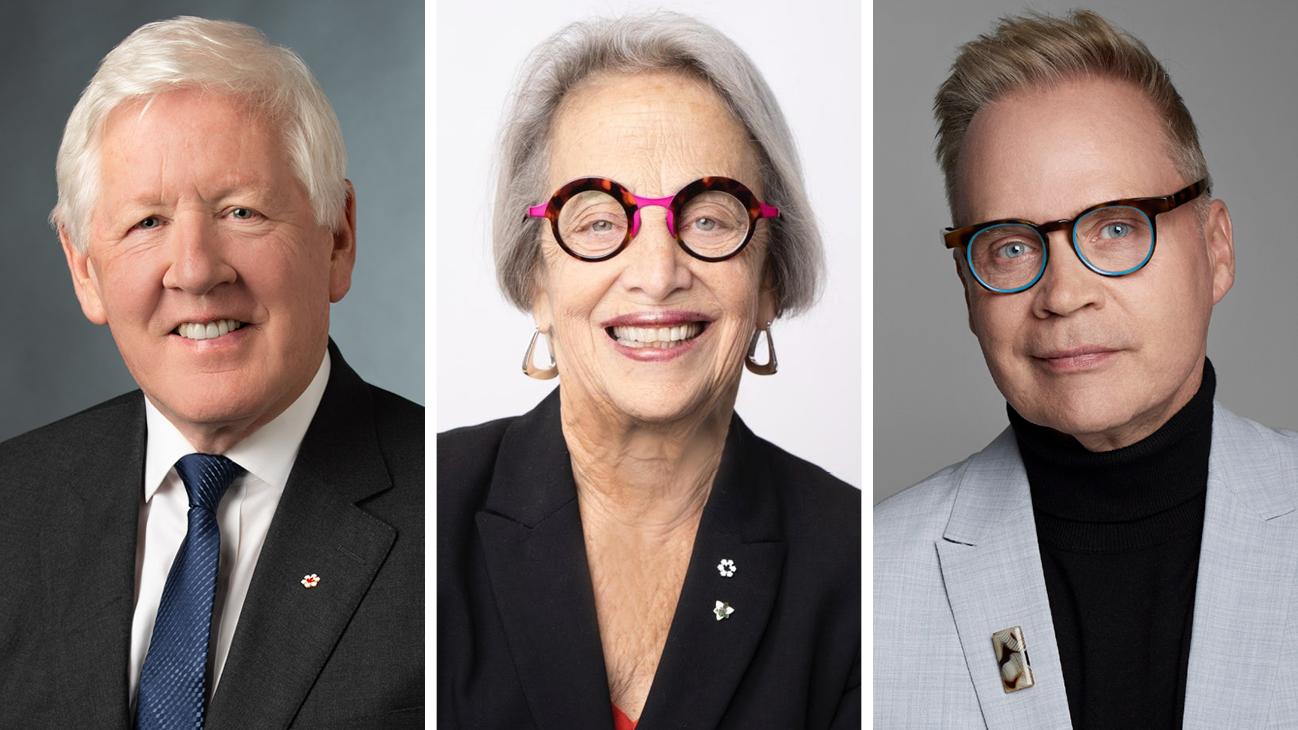
The Hon. Bob Rae
Canada’s 25th Ambassador to the United Nations
While there may be some ongoing dialogue between the United States and Iran, there are very differing accounts about what that dialogue entails. The key thing to watch is whether President Trump can find a path forward to significantly lower the temperature. The attack on Iran was launched jointly by the US and Israel, and it is not clear that Israel supports reducing the conflict.
In the immediate term, the critical issue is the Strait of Hormuz and whether traffic can resume. Even if it does, prices will not fall completely, and concerns around supply reliability will remain. This disruption will intensify inflation, driven not only by the impact on gas and oil delivery, but also fertilizer and other critical agricultural inputs. This will have a knock-on effect on food and other input costs, which will be a significant challenge.
On the positive side, Prime Minister Carney’s strategy to boost domestic energy production and infrastructure investment will be a substantial counterweight, and that will continue to play out. This being said, despite the politics of denial in many places about the need for an ongoing energy shift, it is important for people to recognize that energy conservation has a major role in reducing reliance on price-volatile energy sources.
Moving forward, it is important to have confidence that the uncertainty will have limits. This is an acute phase of a problem. Stay the course on inputs and infrastructure investment. For those looking to invest in infrastructure, stay the course. The only thing we have to fear is fear itself. This too shall pass and opportunities will arise.
With over five decades of leadership at the highest levels of international diplomacy, national politics, and public policy, the Honourable Bob Rae offers audiences rare insight into navigating complex global challenges and leading through transformation.
A Remade Middle East and a Global Energy Shock
Janice Gross Stein
Founding Director of the Munk School of Global Affairs, University of Toronto
The attack on Iran has provoked a serious regional war and a global energy shock that will take months to ripple through the global economy. In the short term, pay close attention to energy supplies as the integrated global energy market struggles to adjust. How well it adjusts will shape inflation and interest rates. Vulnerable economies in the south are most exposed as are economies in Asia. The one exception is China which has stockpiled energy and invested massively in renewables and electric vehicles. Another important consequence is the strategic and economic vulnerability of the Gulf states.
Longer term, Russia is a big winner, both strategically and economically, and a weakened, radicalized Iranian military elite will do everything it can to deter an attack in the future. This war has remade the modern Middle East, making it less secure, more volatile and more divided. The rest of the world has to focus, as it did after 1973, on reducing its dependence on oil and gas.
Few people have a better understanding of global issues than Professor Janice Gross Stein. Her dynamic presentations provide a unique perspective into what’s really happening around the world and what it means to her audiences. Both realistic and hopeful, she leaves her audiences with a better understanding of current global issues, and a clear, compelling vision of the future.
A G-Zero World and the End of American Stability
Ian Bremmer
Global Political Risk Expert
The most dangerous thing senior leaders can do right now is watch signals inside a framework that no longer holds. We spent 30 years in a world where the United States was the backstop: you could hedge, you could wait, and someone would eventually stabilize things. That’s over. Not because China won but because the dominant power is dismantling the order it built.
That changes what signals mean. In the old framework, they told you when to act. In a G-Zero world, they tell you there’s no one coming.
The leaders navigating this best aren’t waiting for clarity. They’re already building the muscle to map leverage beyond Washington, finding where the rules still hold and moving before the next shock lands rather than in reaction to it.
Volatility is the new baseline. The edge lies in having prepared for it before everyone else decides they have to.
Ian Bremmer is one of the world’s leading political scientists. He is the President and Founder of Eurasia Group, a leading political risk advisory firm, and GZERO Media, which provides intelligent and engaging coverage of international affairs. As an independent voice on critical issues around the globe, Ian’s clearheaded insights help business leaders, policy makers, and the general public make sense of the world around them.
A Historic Supply Shock and Coming Breaking Point

Peter Tertzakian
Energy Economist | Bestselling Author
The Iran conflict is a defining supply shock, with the International Energy Agency describing as the largest disruption in the history of the global oil market.
For decision-makers, the immediate task is clear: watch tanker traffic through the Strait of Hormuz, commodity prices, and inflation signals. But data alone is not enough; history matters. In my book A Thousand Barrels a Second: The Coming Oil Break Point and the Challenges Facing an Energy Dependent World, I argue that major supply shocks change how nations source and use energy. I’m now watching for the post-Iran “break point”: a lasting shift in the global mix of oil, natural gas, coal, renewables, and nuclear — and in how energy is consumed in everything from vehicles to power plants. Ultimately, energy and the economy are inseparable.
My advice in these anxious times is practical: track the indicators, study analogous crises, and stay calm. We have seen versions of this movie before.
With four decades of experience in the business of energy — from oil and gas to renewables — Peter Tertzakian is a respected industry leader. He’s frequently called on to share his knowledge of macroeconomic, geopolitical, and business issues with investors, corporate leaders, and policymakers around the world.
Petroleum, Infrastructure, and Canada's Opportunity to Act

Gitane De Silva
Expert on International Trade, Canada–US Relations, Energy Issues, and Geopolitics
Whether we like it or not, oil and gas remain central to the global economy. In addition to being used for combustion, petroleum products are critical inputs in everything from smart phones to medical devices. That means that energy price volatility affects us all.
We first need to remember that war has very real human costs. For those of us fortunate enough to be out of the line of fire, the impacts are economic. As more elements of the energy supply chain (production facilities, pipelines, refineries) are damaged, prices will continue to go up. That damage also means that prices will remain high for a while, even after the war ends. It takes time to bring production back online and years to rebuild infrastructure, meaning the impacts on energy supply and price could linger for months.
What can we do to weather this energy storm? First, recognize that this is a marathon and not a sprint, and plan accordingly. Next, contemplate the role you want Canada to play. We have the potential to improve our national energy security and contribute to global stability, if we can reach agreement on building what is needed to get the energy sources of today — and tomorrow — to market.
Gitane De Silva is a recognized public policy leader with executive experience at provincial, national, and international levels. Over the course of her 25-year career, she worked extensively on Canada–US relations, energy and environment issues, intergovernmental relations, and complex negotiations. She delivers actionable insights and strategic clarity on leadership, geopolitics, and the energy sector.
The Third Oil Shock and Canada's Missed Opportunity
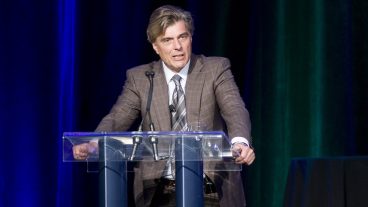
Jeff Rubin
Economist | Energy, Trade, and Financial Markets Expert | Bestselling Author
The world economy faces a third OPEC oil shock. Not only has Iran closed the Strait of Hormuz, a chokepoint for global oil and LNG supply, but the war is destroying vital energy infrastructure which could take as much as five years to rebuild.
The resulting spike in oil and gas prices creates huge opportunities for energy superpowers the United States and Russia. But despite possessing huge oil and gas reserves the loss of Middle East energy supply is a missed opportunity for Canadian oil and gas producers. Lacking infrastructure they have no way of supplying world markets now desperate for their fuel.
Will a referendum on Alberta separation trigger a new pipeline for heavy oil to the west coast and an LNG export hub on the east coast. If not, will an expansionist American president offer Alberta statehood and a hastily resurrected Keystone XL pipeline?
Jeff Rubin spent two decades as the chief economist at CIBC World Markets where he received 10 citations as Canada’s top ranked financial market economist. He was one of the first economists in the world to predict triple digit oil prices back in 2005 and considered one of the world’s leading energy experts at the time.
Inflation, National Unity, and Staying Grounded

Todd Hirsch
Navigator of Economic Disruption | Speaker | Author
In the short term, the most important economic indicator is inflation. After wrestling it back to 2% over the past three years, the Bank of Canada now faces the risk of another rise, this time driven by the oil price shock. If inflation does climb steadily through the spring (not a certainty), interest rate hikes from the Bank of Canada will follow.
Over the longer term, national unity may pose the greatest threat to economic and political stability. Quebec’s provincial election this fall, along with the possibility of a referendum on separation in Alberta, could weigh heavily on the economy, especially if separatist movements gain support. The result would be uncertainty and disruption.
One practical way to stay grounded in this time of volatility is to know your story: who you are as a leader, why your company exists, and how clearly your team can express that shared purpose.
Todd Hirsch is an internationally renowned economist, keynote speaker, and author whose research and work focuses on enhancing adaptability in an ever-changing world. Having had a front row seat to key issues transforming the global economy for the past 25 years, he helps industry and business leaders prepare for a future that is volatile, uncertain, complex, and ambiguous.
Book One of These Experts for Your Next Event
The world isn’t slowing down — and neither are the questions your audiences are asking. The experts featured in this piece have spent decades inside the rooms where these decisions get made. They don’t just explain what’s happening — they help leaders make sense of it, ask better questions, and move forward with clarity.
Contact us to learn more about our political experts and how to book them for your next event.