
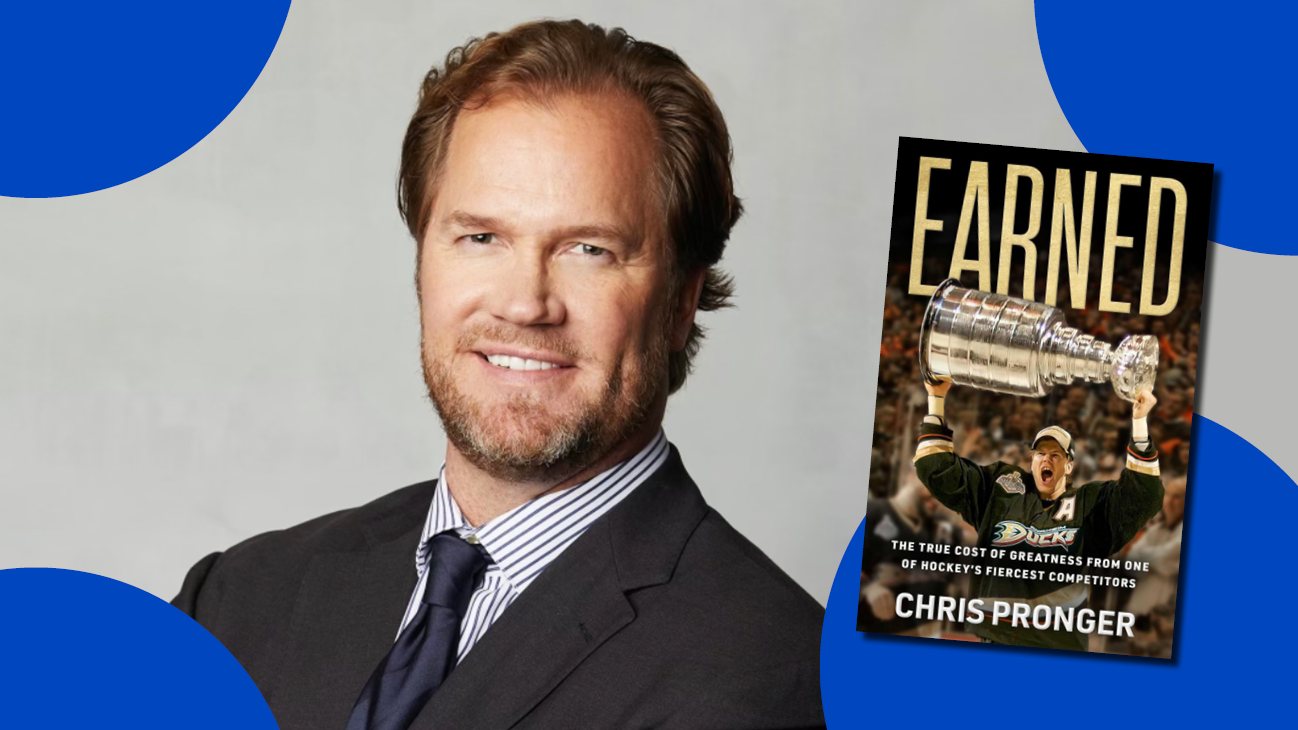
A member of hockey’s elite Triple Gold Club, Chris Pronger is sharing his formula for success in his new book Earned: The True Cost of Greatness from One of Hockey’s Fiercest Competitors.
In the high-stakes world of professional hockey, talent alone doesn’t cut it. In Earned, Chris reveals the raw truth behind his 18-year career defined by triumph, adversity, and transformation. From being booed by his own fans in Hartford and St. Louis as a 20-year-old phenom to hoisting the Stanley Cup with Anaheim in 2007, he shares what the stats don’t: the relentless standards and hard lessons that forged his success.
Breaking down a powerful formula — standards + adversity + ownership = success — Earned isn’t just a hockey memoir, it’s a playbook for excellence in any arena. We recently sat down with Chris to learn more about his book and how he’s helping people think, train, and compete like champions.
Define Your Standards
Speakers Spotlight: You centre your book around the question, “What are your standards?” What forced you to confront that question yourself in your career?
Chris Pronger: I hit a crossroads early in my career, being booed on home ice for two years at Hartford then getting traded to St. Louis and getting booed again relentlessly on home ice. I was caving under the pressure and weight of expectations and struggling to find myself both professionally and personally.
I had a chance to meet with a sports psychologist. He asked that question, and I didn’t have an answer. So I started thinking to myself, when I play well, I feel good and I when I feel bad, I play bad. I didn’t have any standards to fall back on or anything to lean into in those moments of strife or duress. Once I started to set non negotiables and standards that forced me to prepare and show up everyday in the same way, that’s what allowed me to take my game to the next level. It allowed me to utilize my talents to the best of my abilities and utilize that adversity I faced to create the grit and resilience necessary to lean into the myriads of injuries or heartbreaking losses that I would ultimately face during the course of my career.
The High-Performance Formula
SpSp: When it comes to your formula — Standards + Adversity + Ownership = Success — where do most people break down when trying to apply it?
CP: I think a lot of people get lost because they think they need to be super elaborate and in depth. For me my foundation was simple — I needed to be the hardest worker, get rid of the victimhood mentality I had and have a stronger mindset, stop blaming others and take ownership, and fuel myself accordingly, from both a physical and mental perspective.
Then it’s about overcoming our fear of failure. So from a standards perspective, it’s about adhering to them even when you don’t feel the need to trust the process or feel off course or that it’s not working. Often, we quit and don’t have the character or resolve or conviction to uphold our standards, especially when no one is watching or in moments you are being questioned.
Then when you get to ownership, it’s about owning every decision you make and every outcome that comes from your preparation and everything you do. So, when you look at all three, they may seem simple but it’s about consistently following through with daily discipline and habits. Then you will find success.
Demanding Accountability
SpSp: As a leader, how did your personal standards shape the culture of the teams you were part of — and what do leaders still get wrong about accountability today?
CP: In order to hold people accountable, you have to first hold yourself accountable and you have to hold yourself to a higher standard than you’re holding others. I always held myself to an incredibly high standard and my teammates knew that I was always holding myself higher than I was holding them.
So when you’re pushing teammates or co-workers from a leadership perspective, they have to know you have their and the team’s best interest at heart. Then you can continue to grow and push people to get better because they see your daily habits, see how disciplined you are, see what you’re doing on a daily basis to get better and help those around you become better.
They may not see that initially, they may not like being held accountable to being pushed but over time as you continue to evolve and grow and your team starts to get to that next level, they’ll start to see how those standards work for them and allow for greater success.
A Life Built on Standards
SpSp: How did raising your standards off the ice change the way you showed up on it — and in life after your career?
CP: This is not a sometimes thing, it’s an all the time thing. Once you start seeing success from a professional standpoint, those very standards fall into place off the ice as well. As you start to see your evolution and your ability to handle adversity, be comfortable in uncomfortable situations, thrive under pressure and duress, take action and execute in the highest pressure moments and pressure-packed situations, as you start to see those little moments of success, it then starts to boil over to your personal life as well. Those principles bleed into everything you do.
Defining True Greatness
SpSp: What do you hope people walk away from your book with?
CP: First of all, I would love people to walk away from the book feeling comfortable with being uncomfortable, but I also want them to be comfortable holding themselves accountable and to self-assess better. Take an inventory of who they are, their shortcomings, biggest attributes, etc., and then start implementing some of the ideas from the book into their lives to be a better leader, friend, spouse, parent, whatever they are looking to level up in their life.
I want people to look at the big picture and ask, what do I want my legacy to be? As I talk about in the book, I want to have the biggest impact possible and leave a legacy not only with what I did as a hockey player but what I’m doing in life in trying to help people accomplish their goals and dreams.
In general, I think people need to challenge themselves and push themselves to reach bigger heights and be the best version of themselves everyday. You know, make that 1% shift, that’s what I’m hoping my book will help people do.
Book Chris Pronger to Speak at Your Event
Through raw storytelling and real-world experience, Chris Pronger takes audiences behind the highlight reels to share the hard-earned lessons of a champion and how to turn pressure into performance, setbacks into fuel, and talent into lasting success.
Contact us to learn more about Chris and how to book this Stanley Cup and Olympic Champion to speak at your next event.