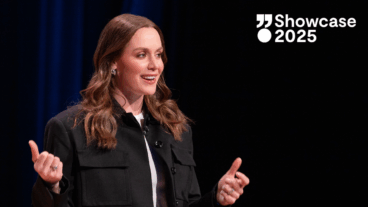
Olympic hurdler Sarah Wells spent 14 years preparing for a race that lasts 55 seconds. She dedicated 90% of her time to training for something that lasts less than one minute. An extreme ratio that Sarah believes is the key to excellence — and one that the corporate world has completely backwards.
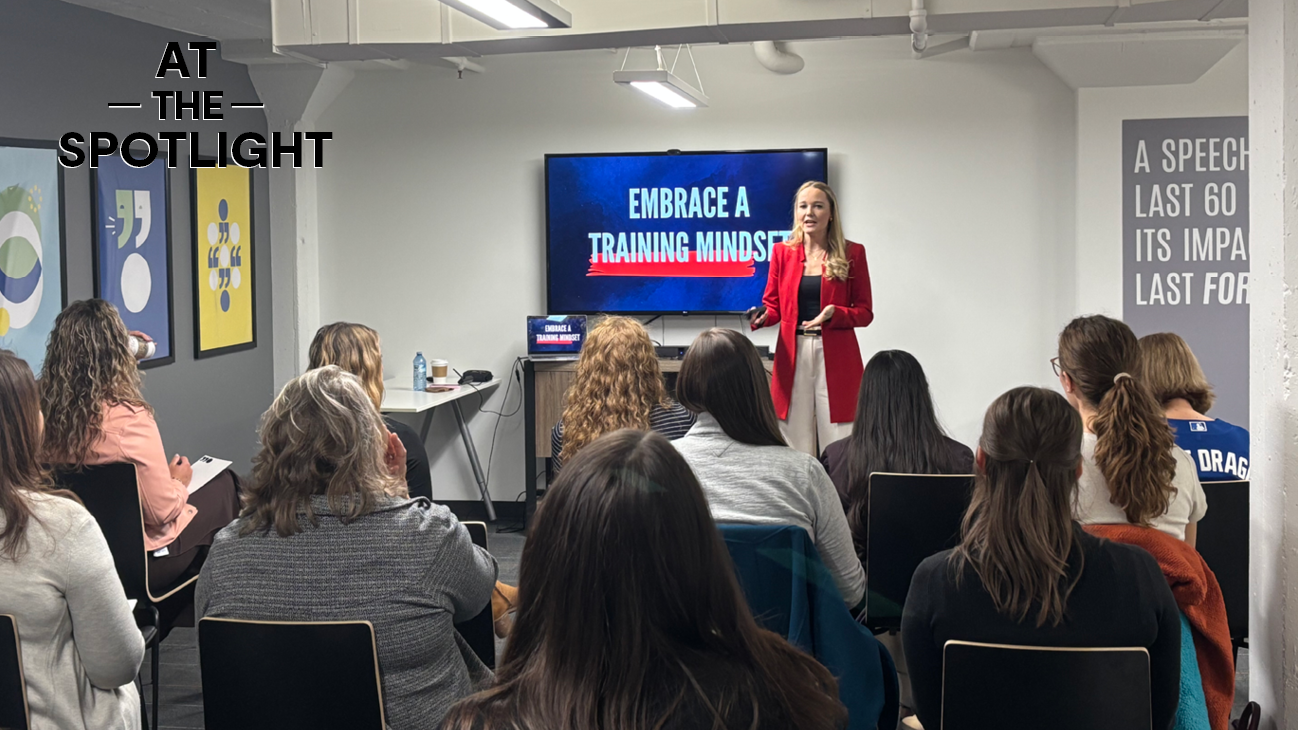
Sarah recently joined us as part of our client-exclusive event series, At The Spotlight, where she shared the core principles that drive excellence, within yourself and others. Through compelling stories and real-life examples, she explored why excellence isn’t reserved for a select few — it’s a mindset that anyone can adopt, no matter who you are, or where you begin.
“What athletes understand and what most leaders miss, is that excellence isn’t about being in the race 90% of the time. Instead, true growth happens when we embrace a training mindset.”
What Is Excellence?
Since retiring from sport and stepping into the corporate world, Sarah noticed the training mindset is rare outside athletics. We spend 10% of our time preparing — attending workshops and conferences, taking courses, learning from each other — then expect ourselves to be in the race 90% of the time. No wonder we’re burned out, she added.
“The leader you want to become, lives in the training,” Sarah said. Excellence isn’t about the outcomes, it’s about who we become in the pursuit of those goals.
What Holds Us Back
The biggest obstacle in our pursuit of excellence is the limiting beliefs we place on ourselves. In 2015, Sarah won silver at the Pan Am Games in Toronto, and she often wonders, could it have been gold?
Racing beside her that day was the world’s #1 hurdler. Sarah knew her competitor’s personal best was better than her own and assumed she would be second to her. When the gun went off, Sarah flew off her block. On the second last hurdle, she looked around — her competitor wasn’t there. She was winning. Sarah questioned what was happening. Where was she? As Sarah jumped over that second last hurdle, her competitor sprinted forward and took the lead, claiming gold.
“What if I didn’t have that split second thought?” Sarah asked. “What if I didn’t question what I was capable of? Would this medal have been gold?”
When we remove our limiting beliefs, we can start to see challenges as opportunities, become more adaptable in the face of friction, and stop comparing ourselves to others. “Excellence isn’t about outperforming the people beside you,” Sarah said, “it’s about outperforming who you were yesterday.”
Three Key Shifts for Cultivating Excellence
With more than a decade of competition at the highest level and a master’s degree in leadership and innovation from the Smith School of Business, Sarah shared three key mindset shifts to cultivate excellence:
1. Go All In
Sarah spent her entire athletic career training for the 2012 London Olympics. Just over a year out, she woke up with searing pain shooting up her leg. The diagnosis: a stress fracture in her femur. She had to sit out for three months — 150 workouts, 450 hours of training lost.
Sarah had a choice: give up or show up. She spent the next three months doing arm and core work — nothing fun or flashy, but foundational. “There is value in focusing on what success is built on, not just what success looks like,” she said.
Three months turned into nine. By the time Sarah was cleared to run, she had just six months left. While she wasn’t physiologically getting stronger during that time, “what I was strengthening was the muscle people couldn’t see: my self-belief.”
Six months later, at the Olympic trials, Sarah qualified for London. “The best day of my life didn’t happen because of six months of greatness,” she reflected. “It happened because of nine months of going all in — before the applause, before the momentum, before I could guarantee the result.”
Going all in means being brave enough to have a vision so big that people might think you’re insane, because to achieve something great, you first have to believe you can.
Excellence isn’t about the outcomes, it’s about who we become in the pursuit of those goals.
2. Break the Blueprint
The best hurdlers in the world take 15 strides between each hurdle. Coming back from her injury, Sarah had lost significant muscle mass, making 15 strides nearly impossible.
Her coach suggested something radical: take 16 strides. This meant alternating lead legs and doing something no world-class athlete did. It went horribly at first, but Sarah kept at it. She qualified for the Olympics with a 16-stride race pattern — her unique path to excellence.
We all have a “16-stride”, Sarah said, a way to achieve excellence that only we can. The key is giving yourself permission to experiment and lean into your unique strengths.
3. Find Strength in Your Stumbles
Six weeks before the 2016 Olympics, Sarah had the best training session of her career. The next morning, her hamstrings felt tight. She knew she shouldn’t work out, but she thought, I’m an Olympian. I don’t miss workouts. Midway through the session, her hamstring tore.
“Your highest level of success is not your new baseline,” Sarah learned. High performers know what it takes to succeed, so we assume nothing less is acceptable. But life is a rollercoaster of good days and bad. Bad days don’t mean you’re falling off — they just mean you’re on the road, she continued.
By the time trials came, Sarah’s hamstring was 85% healed. She was winning at the halfway point, then competitors started passing her. She finished fourth by half a second. Her Olympic dreams evaporated.
A year later, Sarah realized something profound: she believed in herself more strongly now then when she made the Olympics. “I knew my hamstring wasn’t 100%, but I didn’t let circumstances define my outcome. It showed me a strength inside I didn’t know I had.”
In our pursuit of excellence, we’re supposed to hit the hurdle. Hard work doesn’t always lead to success, but being resilient and choosing to get back up will always help you find your next opportunity.
The Foundation for Future Success
Excellence isn’t reserved for those who cross the finish line first. It belongs to those brave enough to go all in, willing to break the blueprint, and resilient enough to find strength in every stumble. When you shift your focus from outcomes to who you’re becoming in the pursuit of your goals, you don’t just chase excellence — you embody it.
Bring Sarah Wells to Your Next Event
Sarah Wells doesn’t just inspire audiences — she equips them with practical frameworks to cultivate excellence in themselves and their organizations. Her high-energy delivery, compelling storytelling, and research-backed insights create transformative experiences that shift how teams approach challenges, leverage their unique strengths, and build cultures of excellence.
Contact us to learn more about Sarah and how to book her for your next event.